


Patagonia is a land known for its strong winds, diverse ecosystems, and vast open landscapes, as well as for a fauna that is both charismatic and highly adapted to life in extreme climatic conditions. Among its more discreet inhabitants is the armadillo, a primitive-looking mammal that belongs to one of the oldest lineages on the planet.
Xenarthra: Strange Joints, Extraordinary Strength
Armadillos belong to the superorder Xenarthra, an ancient group of placental mammals that evolved in isolation in the Americas and is now exclusive to this continent. This group also includes other remarkable animals such as sloths and anteaters.
The term Xenarthra comes from Greek and means “strange joints”, referring to the presence of additional articulations between the lumbar vertebrae. This anatomical feature provides them with exceptional strength and is especially useful for digging, a key skill in their way of life.
An Ancient Lineage Still Living on Earth
Armadillos are true living relics. Their body design tells an extraordinary evolutionary story: this group has inhabited the planet for approximately 60 million years. Throughout that time, they have survived dramatic climatic changes and major extinction events, including the disappearance of the glyptodonts, large-bodied ancient relatives that once shared their lineage.
A Unique Armor Among Mammals
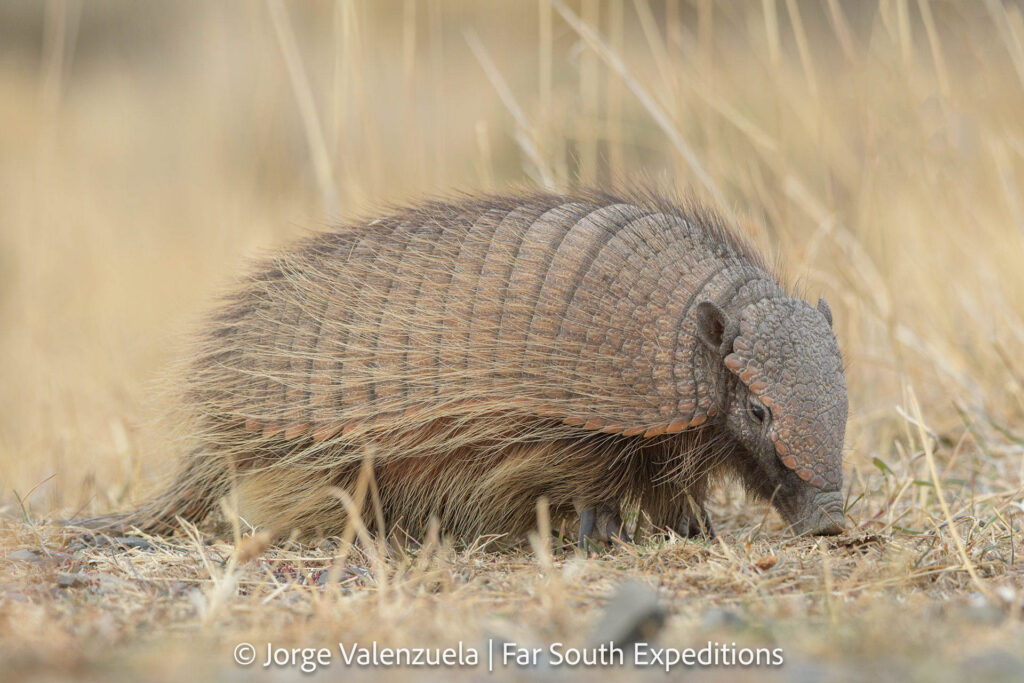
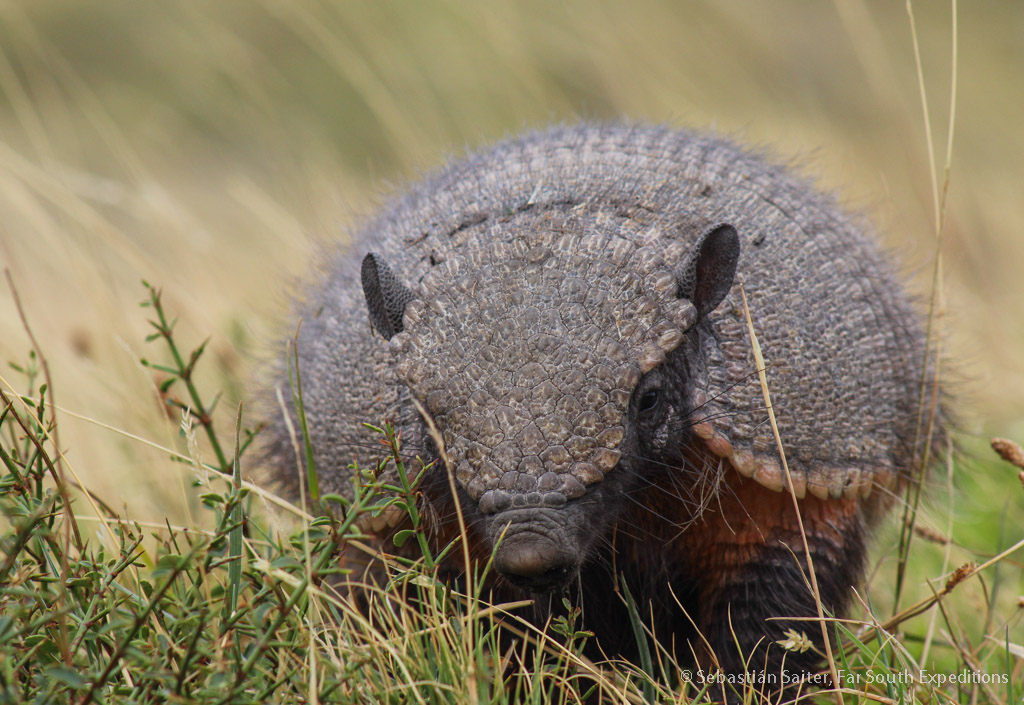
What truly sets armadillos apart from their relatives such as sloths and anteaters and from any other living mammal is their dorsal armor, formed by bony plates.
This structure is not rigid: it includes flexible, movable bands along the middle of the body, allowing armadillos to move efficiently, dig, and protect themselves without sacrificing mobility. It is a true natural armor, shaped by millions of years of evolution.
Armadillos in Patagonia
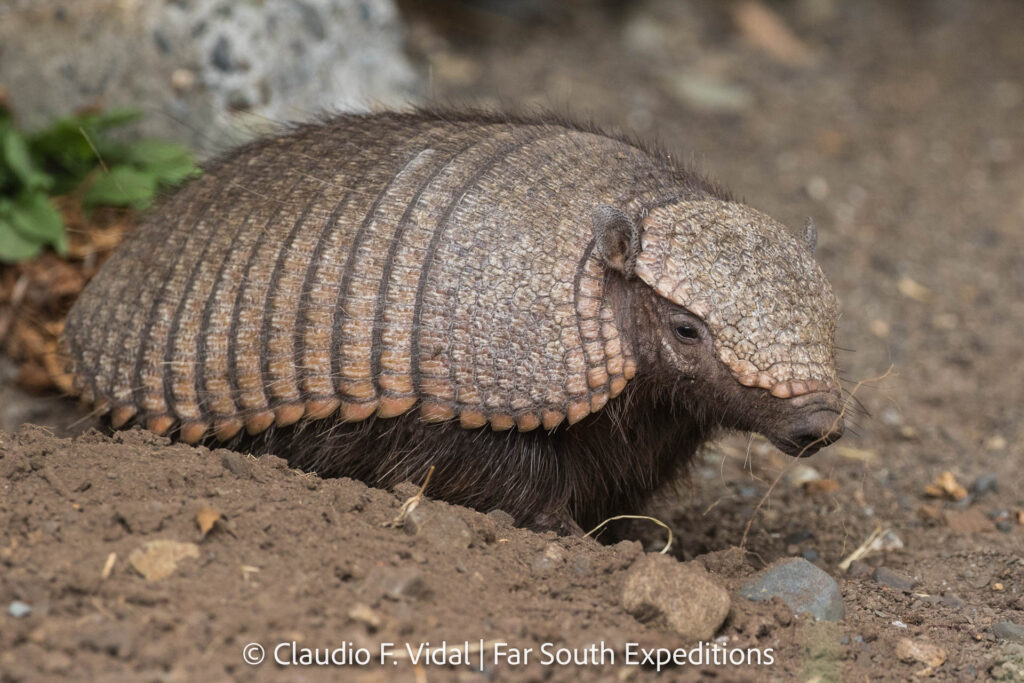
Three species of armadillos occur in Chile, each associated with different ecosystems. In the Chilean Altiplano, small populations of the screaming hairy armadillo (Chaetophractus vellerosus) can be found. This species was heavily hunted illegally in the past, mainly due to the use of its shell in the making of charangos.
Farther south, in Chilean Patagonia, the large hairy armadillo (Chaetophractus villosus) and the Patagonian pichi (Zaedyus pichiy) are distributed across the region. In Chile, both species have a relatively restricted geographic range, occurring mainly along the eastern slopes of the Andes, from south-central Chile to the Magallanes region. These areas encompass a wide variety of environments, many of which are currently exposed to different human activities.
Armadillos have an omnivorous diet, with a strong preference for terrestrial invertebrates, particularly beetles and crickets. Their diet is supplemented with plant material, mainly grasses, and to a lesser extent with vertebrates. Vertebrate consumption is occasional and usually limited to carrion or the opportunistic capture of small animals such as rodents, hares, or waterbirds.
Burrows as Refuge and Underground Homes
Armadillos are skilled diggers that use their strong forelimbs and claws to build burrows, which are essential for their survival. These tunnels not only provide shelter from predators such as pumas and foxes, but also function as a thermal regulation system, allowing armadillos to withstand the extreme temperatures of Patagonia. In addition, many of these burrows are later used by other species, turning them into small yet important microhabitats within the ecosystem.




Leave a Reply
Your email is safe with us.