


Birding Chile tour | Birding Chile journey is a Quest for the endemics and specialties of the Heart of Chile. We will bird throughout the most scenic areas of the country, visiting a wide range of habitats, including mountain areas, rocky seashores, oceanic waters, scrubby slopes, broad-leaf woodlands, temperate and sub-Antarctic forests. Discover the birdlife of Chile in the hands of a Chilean-based company and the expertise and field skills of highly experienced local guides. Birding Chile tours.
Birding Chile |
Birding Chile tours | A Quest for Endemics and Specialties of Chile
Birding Chile is a quest for the endemics and specialties of the Heart of Chile. We will bird throughout the most scenic areas of the country, visiting a wide range of habitats, including mountain ranges, rocky seashores, oceanic waters, scrubby slopes, broad-leaf woodlands, and temperate and sub-Antarctic forests. Discover the birdlife of Chile through the expertise and field skills of highly experienced local guides from a Chilean-based company.
The Birding Chile tour is an exciting birdwatching journey aimed at discovering the endemics and specialties of this 3,000-mile-long biogeographical island while exploring its marvelous landscapes, excellent infrastructure, great cuisine, and fabulous wines.
Chile is a land of massive contrasts – truly a geographic extravaganza. On this adventure, we will explore incredibly diverse habitats and marvel at some of the most beautiful landscapes on Earth while enjoying excellent hotels and local cuisine. From Mediterranean scrub to lush rainforests, and from coastal marshes to the impressive lakes and volcanoes of south-central Chile, our search for avian specialties will take us from the high Andes to the cold, productive waters of the Humboldt Current. We will find many fascinating species, including those with very restricted ranges and those endemic to the country.Birding Chile tours
Read our Birding Chile / Birdwatching Chile Blog here. Birding Chile tours
Scheduled Small Group Trip |
Departures |
October 29 to November 8, 2027
October 29 to November 8, 2028
11-day trip from Santiago de Chile.
5-day Northern Chile pre-extension.
6-day Southern Patagonia post-extension.
Maximum: 8 participants + 1 Tour Leader from our company.
Click for space request |
Pincoya Storm-Petrel, off Reloncavi Sound © Claudio F. Vidal, Far South Expeditions
Itinerary in Brief |
Day 1 • Santiago – Batuco Lake – Mantagua Wetland – Viña del Mar (1 night)
Day 2 • Valparaíso – Algarrobo – Santo Domingo (1 night)
Day 3 • Maipo Estuary – Vilches Alto (2 nights)
Day 4 • Altos de Lircay National Reserve
Day 5 • Vilches Alto – Lago Colbún – Cajón del Maipo (2 nights)
Day 6 • El Yeso Valley – Termas del Plomo
Day 7 • Farellones – Valle Nevado – Flight to Puerto Montt (1 night)
Day 8 • Ferry to Chiloé Island – Puñihuil Penguin Colony – Tepuhueico Park (2 nights)
Day 9 • Tepuhueico Park
Day 10 • Boat trip off Queilen – Ancud (1 night)
Day 11 • Bosque Manao – Caulín Estuary – Puerto Montt – End of the trip
Trip Highlights |
• Pelagic trips and ferry rides offer exceptional opportunities to spot specialties of the eastern Pacific and Southern Ocean.
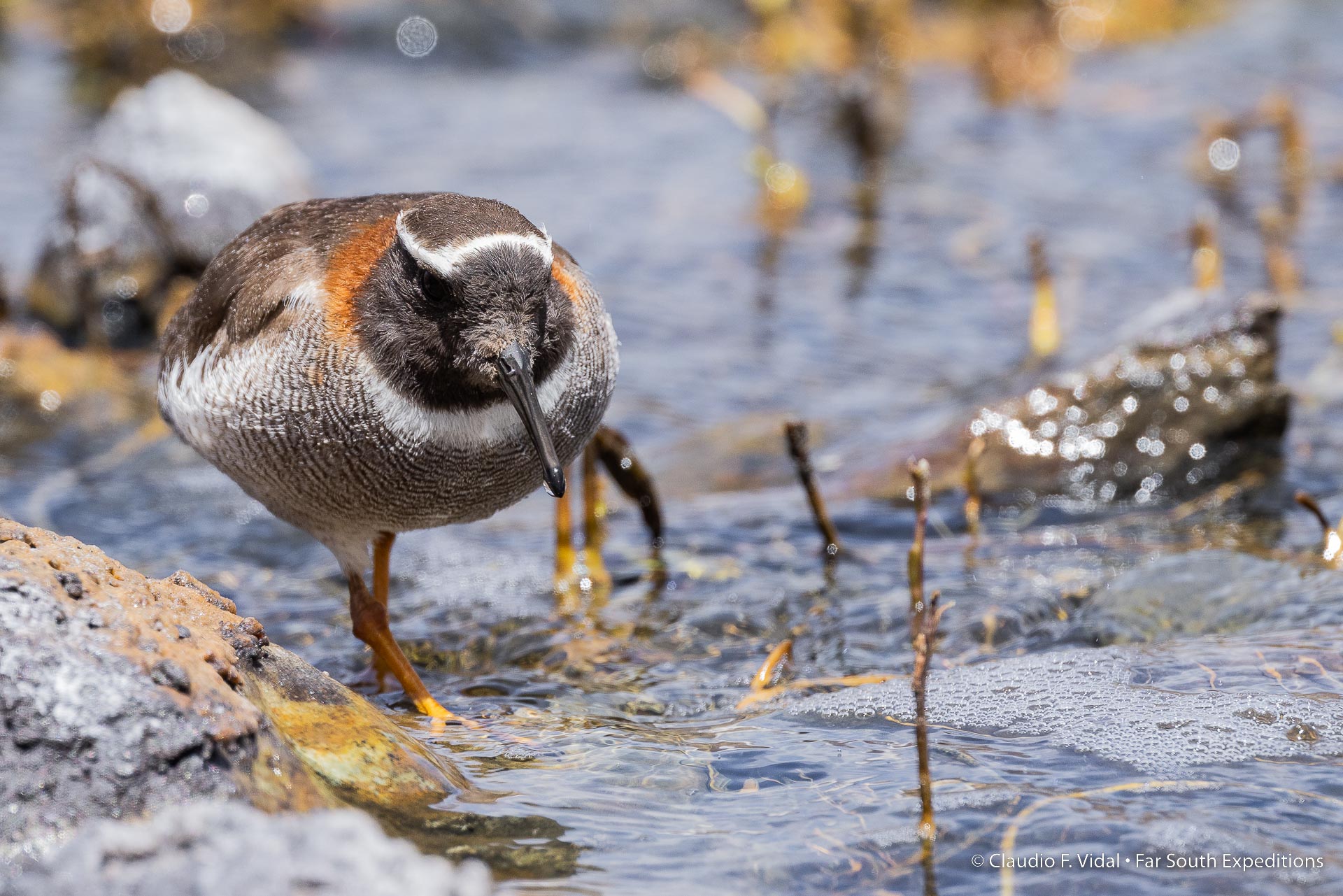
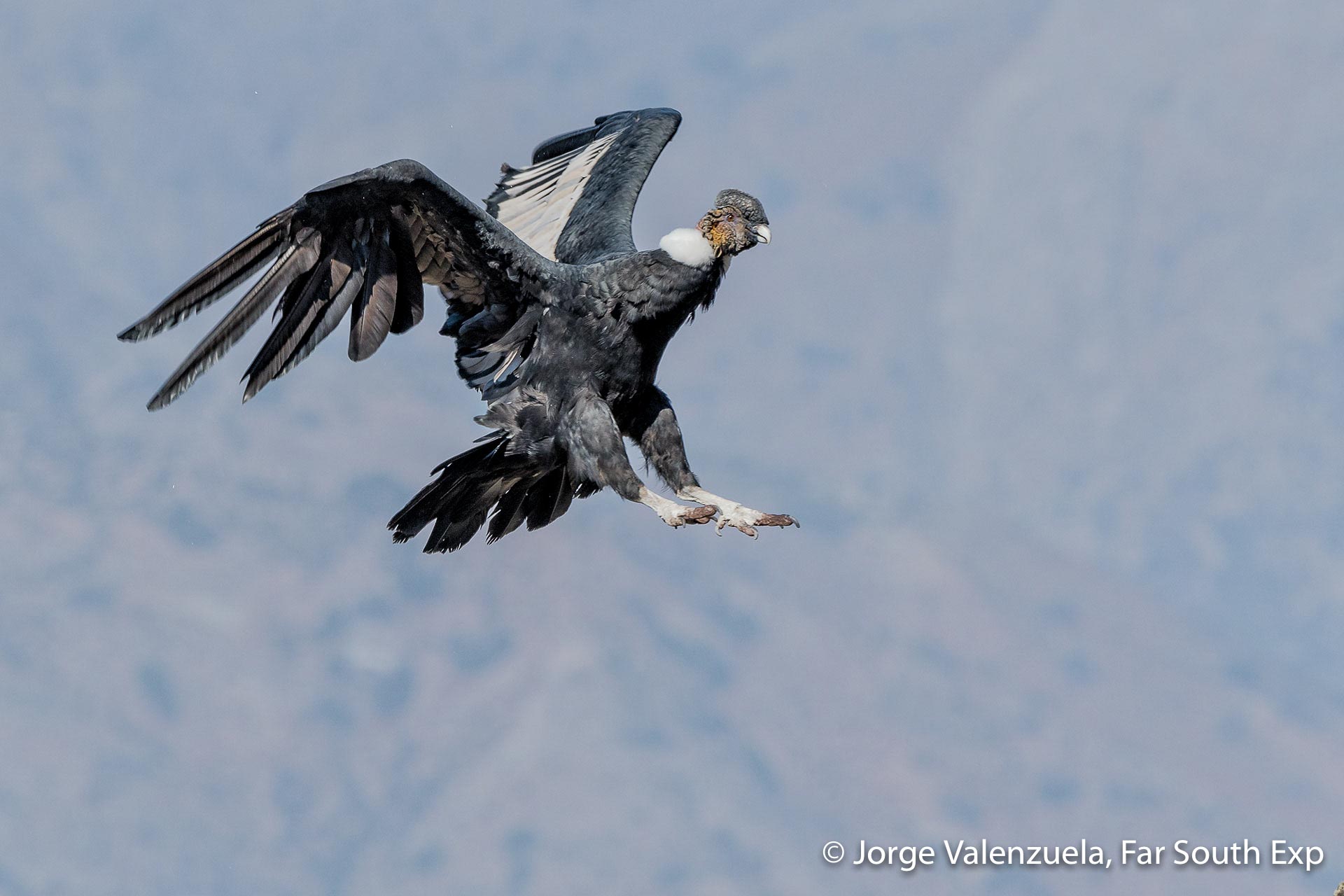
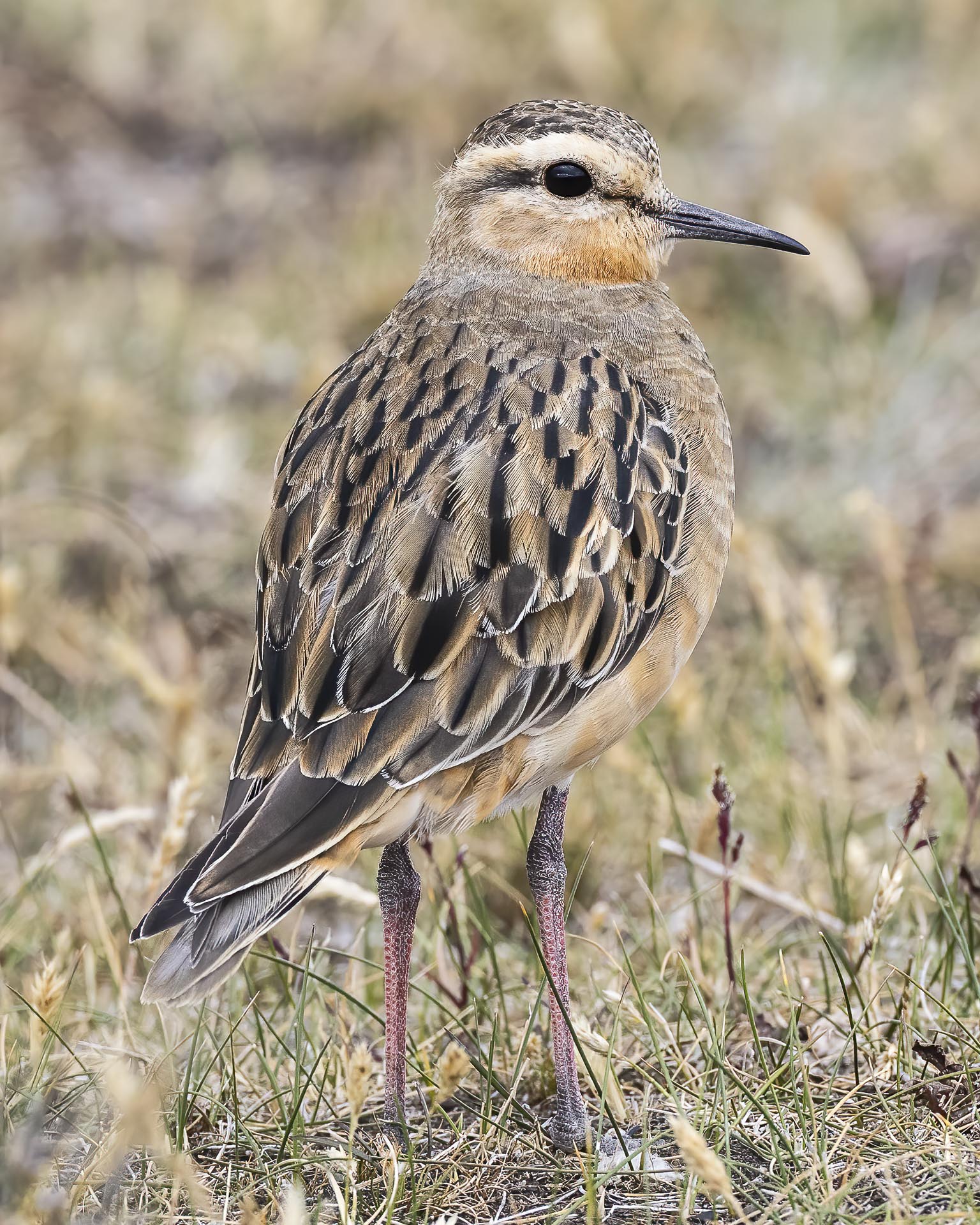
• Highlights include the magnificent Andean Condor and Magellanic Woodpecker, as well as stunning waders such as the Diademed Sandpiper-Plover and Collared Plover.
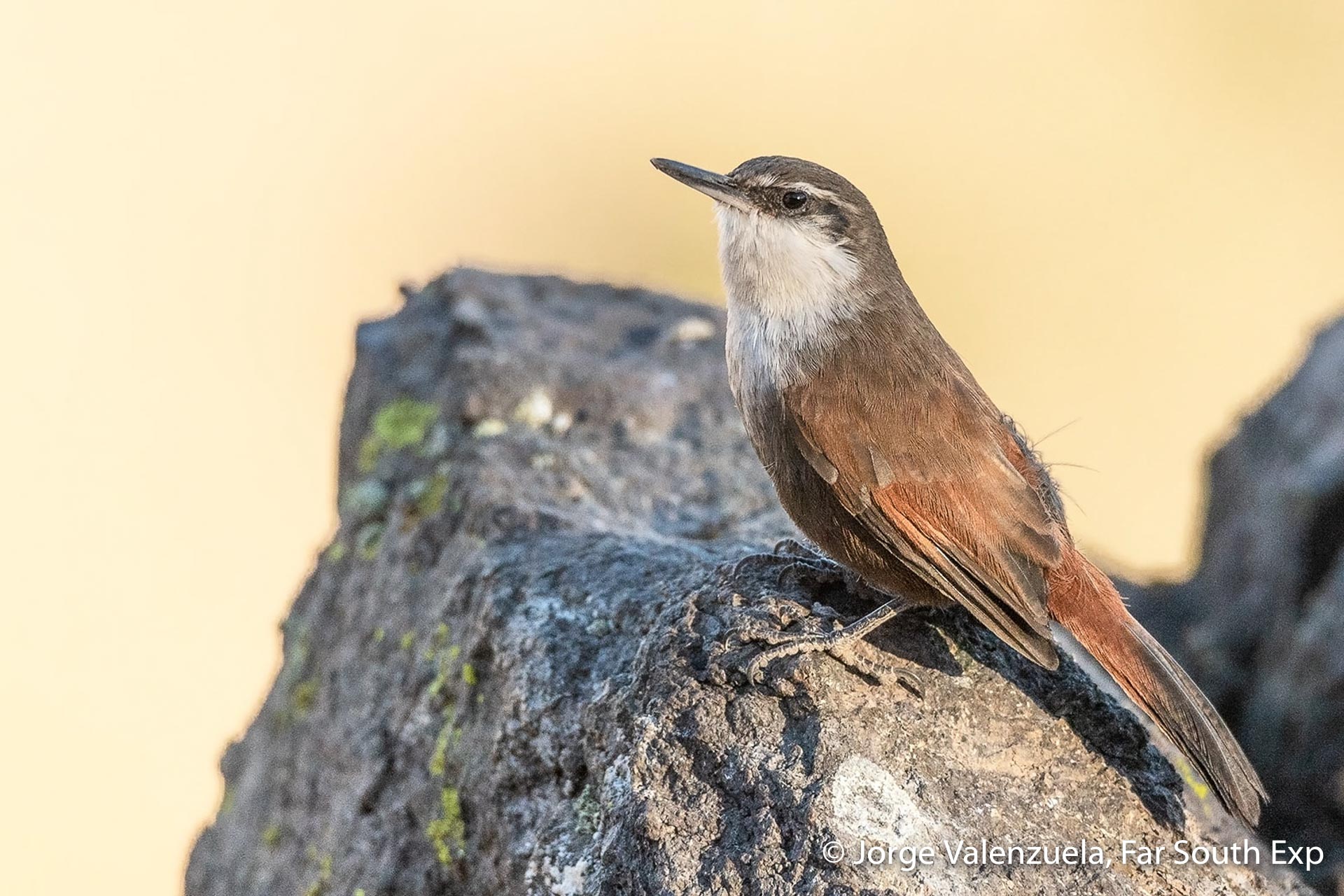
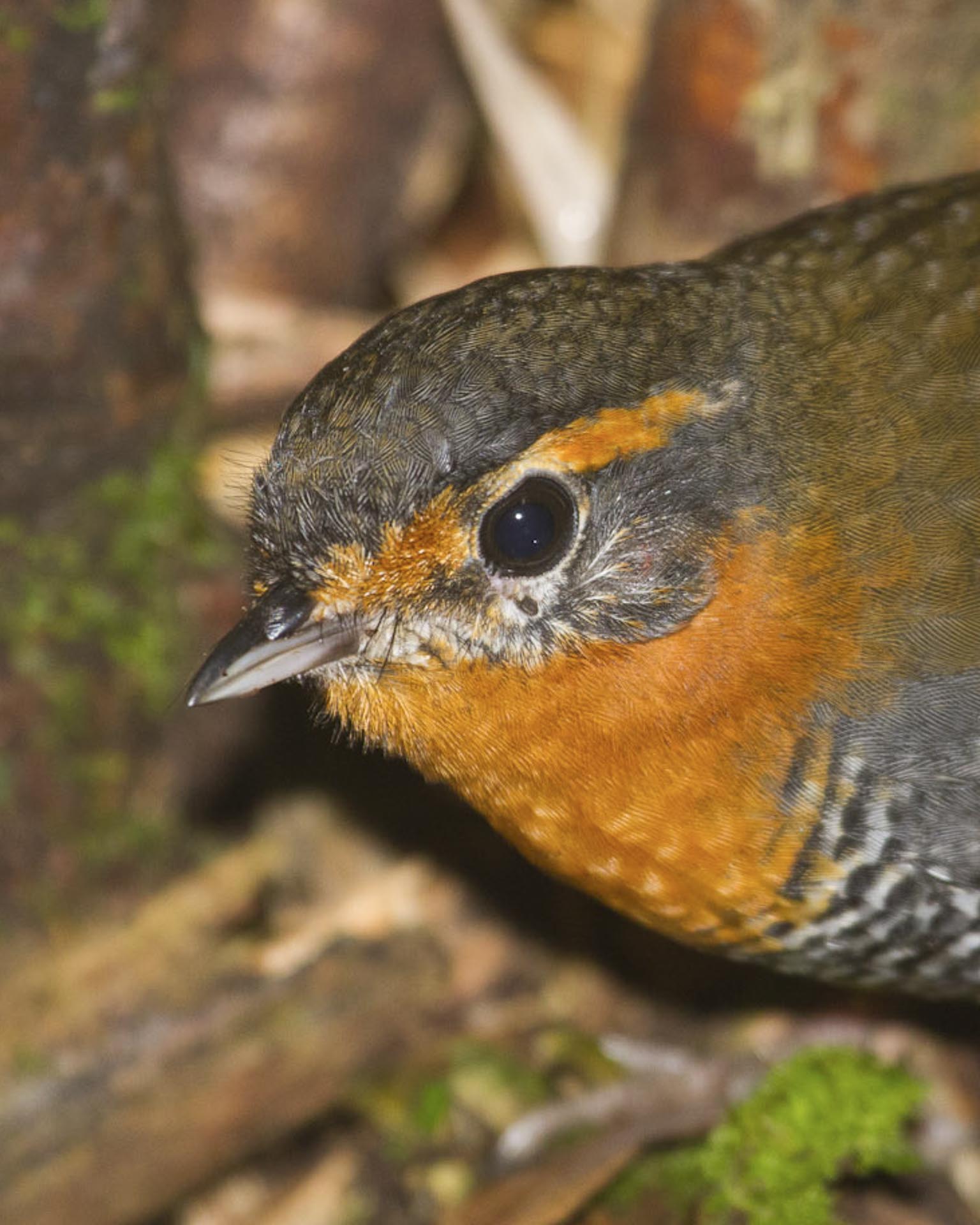
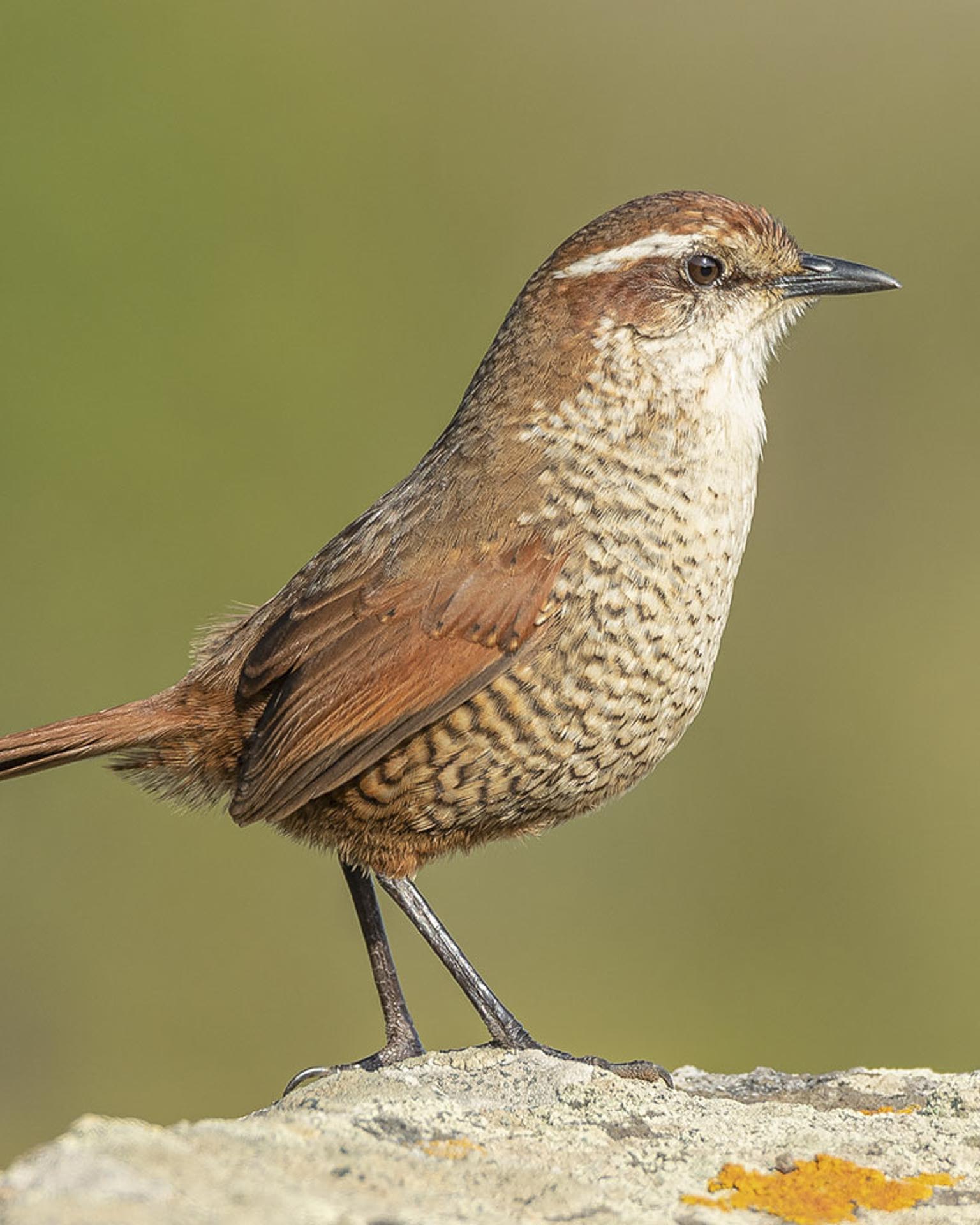
• We will seek out up to nine endemic species, including the Slender-billed Parakeet, Crag Chilia, Moustached Turca, and White-throated Tapaculo, alongside the quasi-endemic Chestnut-throated Huet-huet.
• A spectacular system of national parks and nature reserves protects some of the most beautiful landscapes on Earth.
Trip Gallery |
Birding Chile • 11-day trip from Santiago de Chile
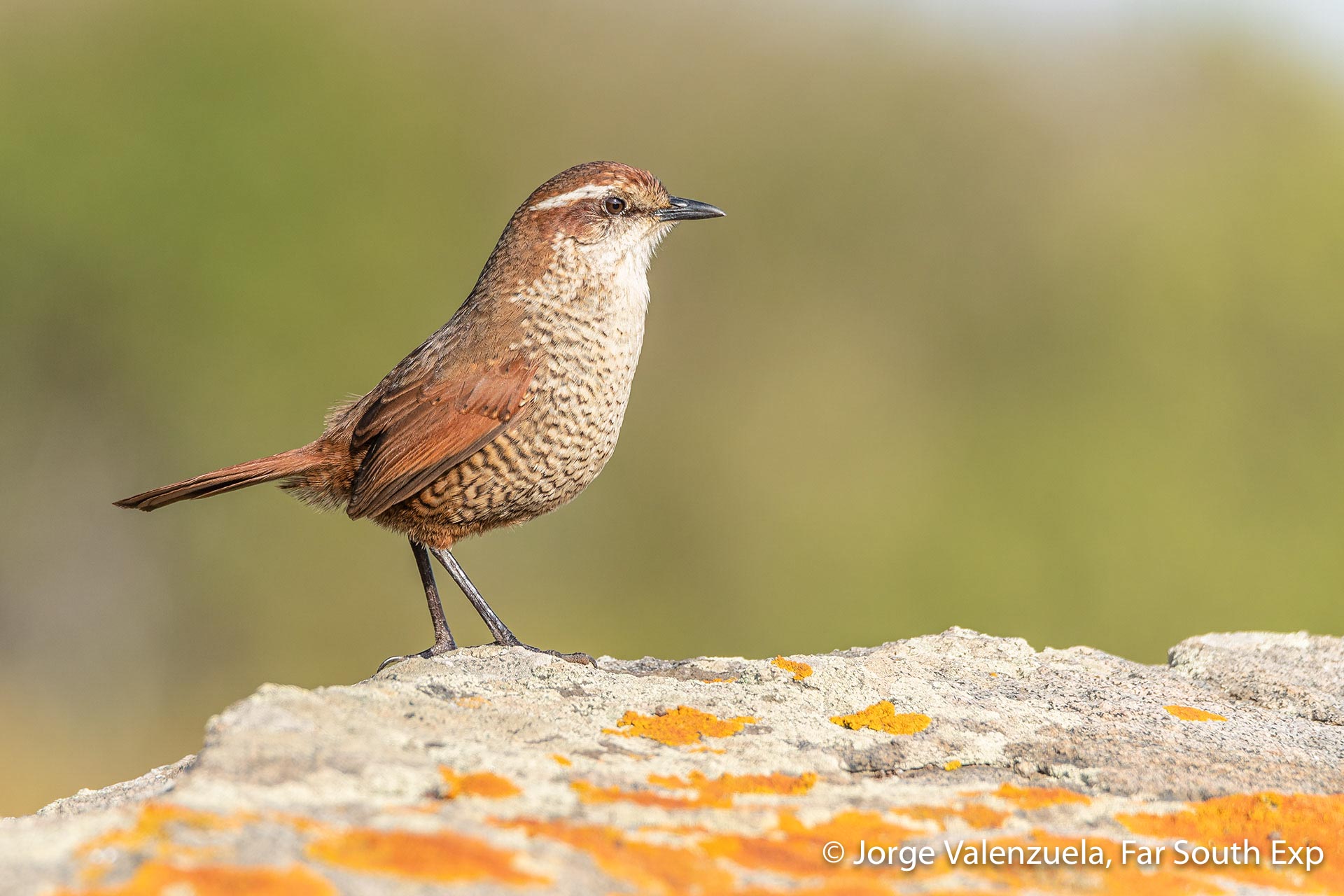
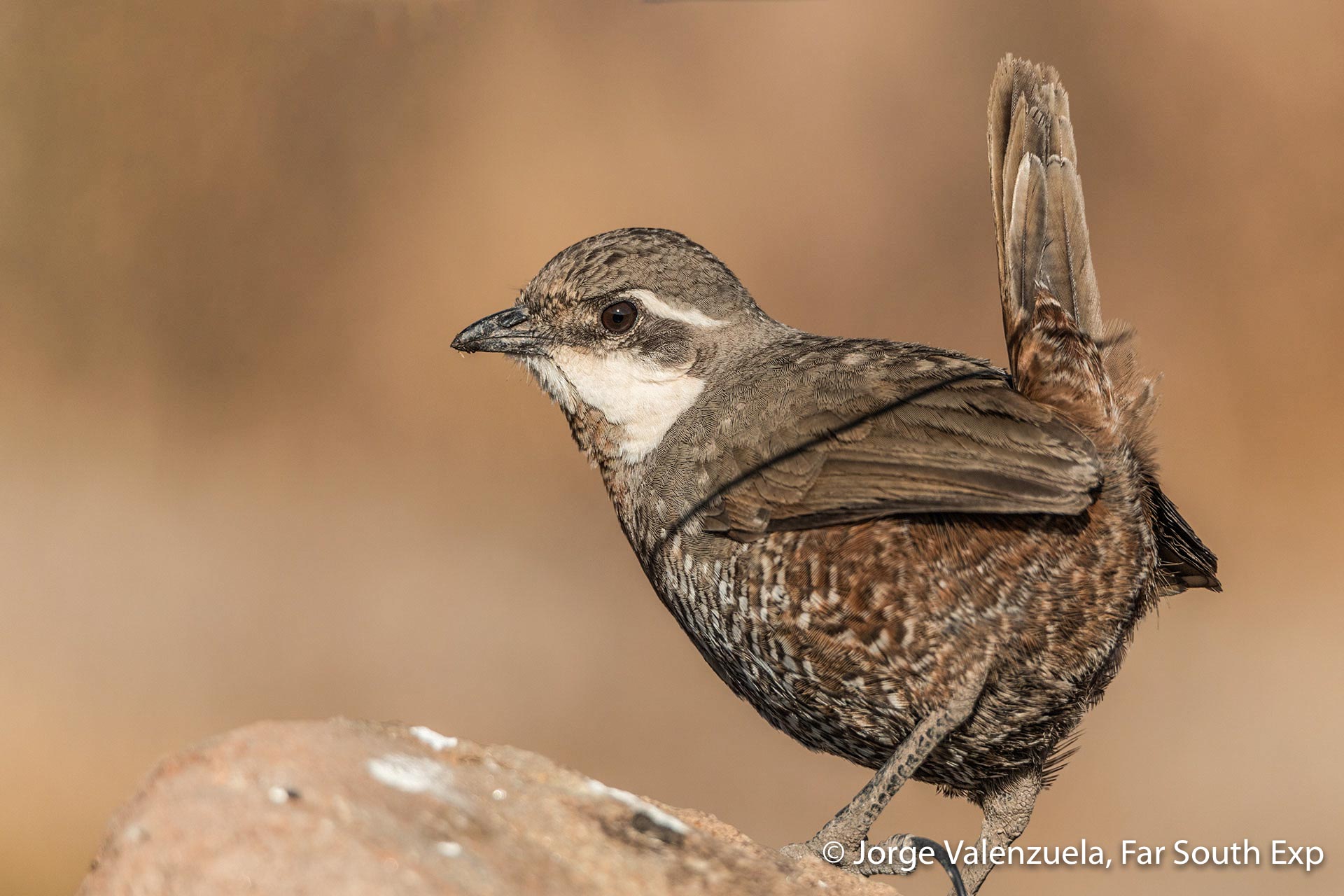
Detailed Itinerary and Activities |
Easy to moderate walks | From sea level up to 3,000m. / 9842ft. | Three boat excursions + 2 ferry rides | Good photo opportunities
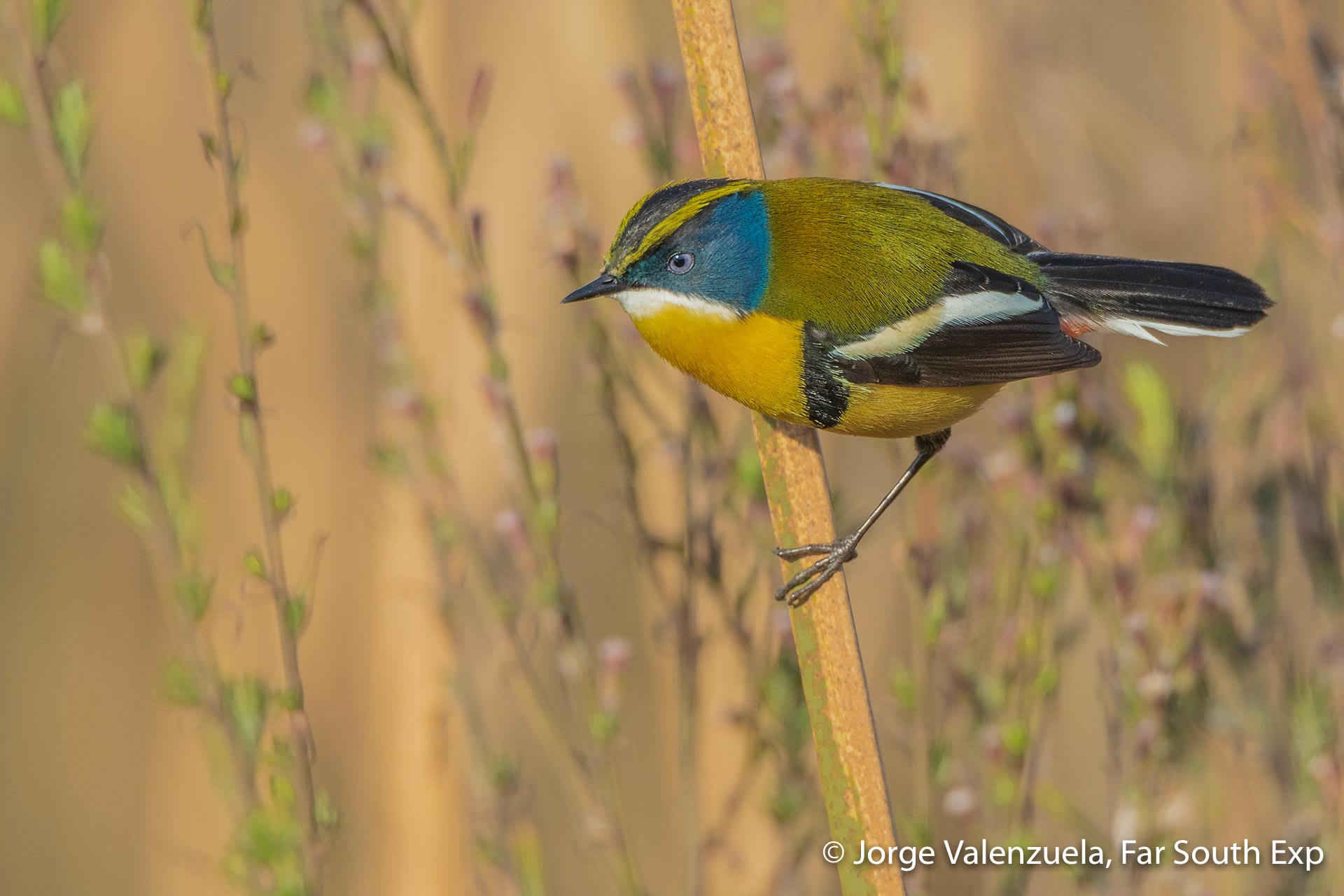
Our birding adventure in Chile begins today. Departing early from Santiago, we head north to explore the freshwater wetlands of Batuco Lake, a vital sanctuary for the region’s avian life. Despite growing urban encroachment, the lake continues to support a remarkable diversity of waterbirds and marsh specialists. Our primary focus here will be locating the striking Many-colored Rush Tyrant and the secretive Wren-like Rushbird, both of which thrive within the lake’s extensive reedbeds. Other potential sightings include Yellow-billed Pintail, Cinnamon Teal, Chiloe Wigeon, Red Shoveler, and various herons.
After lunch, we journey west to the coast to bird the productive Mantagua wetland complex. This mosaic of marshes, dunes, and coastal lagoons hosts an impressive variety of species. We will search for specialties, including the Black-headed Duck and Stripe-backed Bittern, as well as several migratory shorebirds. Offshore, we may spot the Peruvian Booby and Snowy-crowned Tern, while raptors like the Variable Hawk patrol the surrounding grasslands. We end the day in the coastal town of Viña del Mar, overlooking the Pacific.
Overnight: Hotel Oceanic, Viña del Mar (Lunch, Dinner)(Guide)
Today promises an unforgettable journey into the cold, nutrient-rich waters of the Humboldt Current, one of the world’s premier pelagic birding destinations. Departing early from Valparaíso, we venture offshore to seek out a stunning diversity of seabirds. We hope to encounter a variety of “tubenoses,” including Salvin’s Albatross, Black-browed Albatross, Northern and Southern Giant-Petrels, White-chinned Petrel, Pink-footed and Sooty Shearwaters, and the highly sought-after Peruvian Diving-Petrel. Depending on sea conditions, we may also see Wilson’s Storm-Petrel, Chilean Skua, and various gulls and terns. We may even catch glimpses of marine mammals, including Dusky Dolphins, South American Fur Seals, and whales.
Following lunch, we head south along the scenic coastline toward Algarrobo. Here, we explore the coastal shrublands and rocky slopes to find Chilean endemics such as the White-throated Tapaculo, Dusky-tailed Canastero, Moustached Turca, and Chilean Mockingbird. If time allows, we will scan the offshore islets for Humboldt Penguins, Seaside Cinclodes, and South American Sea Lions. By evening, we arrive in Santo Domingo, perfectly positioned near the Maipo River estuary for tomorrow’s exploration.
Overnight: Hotel Rocas de Santo Domingo (Breakfast, Lunch, Dinner)(Guide)
The Coastal Range divides the Central Valley from the Pacific, and this morning, we explore the Maipo River Estuary, one of the country’s most productive wetland systems. Our main targets here include the locally scarce Ticking Doradito, a highly elusive marsh specialist. We will also scan for Black Skimmer, Elegant and South American Terns, the Collared Plover, and various migratory shorebirds along the mudflats. The surrounding wetlands are often alive with Spot-flanked Gallinule, Plumbeous Rail, and a variety of waterfowl.
After a rewarding morning, we travel south via Route 5, bypassing Santiago’s traffic to reach the Andean foothills by late afternoon. As we approach Vilches, the landscape shifts into rolling hills and magnificent Southern Beech (Nothofagus) forests. After dinner, we will enjoy an optional evening owling session to search for the impressive Rufous-legged Owl.
Overnight: Hostería de Vilches, Vilches (Breakfast, Lunch, Dinner)(Guide)
Altos de Lircay Nature Reserve protects an extensive expanse of Nothofagus forest, representing one of central Chile’s finest birding areas. We will spend the morning exploring the beautiful woodlands around Piedras Tacitas, a prime habitat for forest specialties including the magnificent Magellanic Woodpecker and the endemic Chestnut-throated Huet-huet. Other targets include the Austral Parakeet, Chucao Tapaculo, White-throated Treerunner, Thorn-tailed Rayadito, and the Austral Pygmy Owl.
After lunch, we continue our birding deeper within Altos de Lircay, where old-growth forests and mountain streams provide refuge for even more forest specialists. With careful observation, we hope to reveal the Magellanic Tapaculo, Fire-eyed Diucon, Austral Blackbird, and Black-chinned Siskin. We conclude the day with another evening owling session in search of the Rufous-legged Owl.
Overnight: Hostería de Vilches, Vilches (Breakfast, Lunch, Dinner)(Guide)
This morning, we begin our journey northward with several strategic stops. The open agricultural fields around Vilches offer excellent opportunities to spot the endemic Chilean Tinamou, a notoriously elusive species often detected by its haunting call. Continuing toward Lake Colbún, we look for one of Chile’s most localized parrots, the colorful Burrowing Parakeet, which nests in riverbanks and sandy cliffs.
Later, we drive north toward the spectacular Cajón del Maipo, a dramatic Andean canyon serving as a gateway to some of the finest mountain birding in the central region. Before reaching our lodge, we will search the turbulent, boulder-strewn waters of the Maipo River for the Torrent Duck, a remarkable, highly specialized species. By evening, we arrive at our comfortable riverside lodge, perfectly positioned for tomorrow’s high-Andean excursion.
Overnight: Santuario del Río, San José de Maipo (Breakfast, Lunch, Dinner)(Guide)
We dedicate this full day to the high Andean foothills surrounding El Yeso Reservoir. We hope to be rewarded with sightings of the endemic Crag Chilia, alongside Andean Condors, Black-chested Buzzard-Eagles, and other specialties such as the Black-winged Ground Dove, Grey-flanked Cinclodes, Black-billed Shrike-Tyrant, and Yellow-rumped Siskin.
An early start allows us to reach the high-elevation wetlands of Termas del Plomo in the calmest hours of the day. A careful survey of the alpine grasslands and bogs may produce the stunning Diademed Sandpiper-Plover, our primary target. This sought-after Andean endemic inhabits only pristine wetlands above 3,000 meters. Other specialties we hope to encounter include the White-sided Hillstar, Rufous-banded and Creamy-rumped Miners, Gray-breasted Seedsnipe, various Ground-Tyrants, and the Greater Yellow-Finch. After a day immersed in spectacular mountain scenery, we will return to our lodge in Cajón del Maipo.
Overnight: Santuario del Río, San José de Maipo (Breakfast, Lunch, Dinner)(Guide)
Leaving Cajón del Maipo, we ascend into the high Andes of Farellones and Valle Nevado. Our focus this morning is the majestic Andean Condor; we will visit key viewpoints along the mountain road where these giants soar among the cliffs and canyons. These spots offer outstanding chances for close-range observation and photography.
As we continue toward Valle Nevado, we take in breathtaking alpine vistas while searching for high-elevation specialties. This excursion serves as a secondary opportunity for species we may have missed earlier, such as the White-sided Hillstar, Mountain Caracara, Rufous-banded Miner, and Black-billed Shrike-Tyrant. After reaching nearly 3,000 meters, we descend directly to Santiago International Airport for our evening flight to Puerto Montt, the gateway to Chile’s Lake District and northern Patagonia.
Overnight: Hotel Presidente, Puerto Montt (Breakfast, Lunch, Dinner)(Guide)
We take an early ferry across the Chacao Channel to Chiloé Island. During the crossing, we expect to see Black-browed Albatross, Southern Giant-Petrel, Imperial Cormorant, Magellanic Diving-Petrel, and other birds associated with these productive coastal waters.
Once on the island, we travel to Puñihuil for a boat excursion to the offshore islets. This unique site hosts a mixed colony of Humboldt and Magellanic Penguins—one of the few places worldwide where both species nest side-by-side. We may also find Southern Marine Otter, Magellanic and Red-legged Cormorants, Kelp Goose, and Flightless Steamer-Duck. After lunch, we traverse the scenic countryside of Chiloé toward the remote native forests of Tepuhueico, one of the island’s most important conservation areas.
Overnight: Tepuhueico Lodge, Tepuhueico (Breakfast, Lunch, Dinner)(Guide)
Today is dedicated entirely to the diverse habitats of Tepuhueico Park, from lush native forests to the rugged Pacific coastline. Our morning focus is the extensive evergreen forest, which protects some of Chiloé’s finest birding. Main targets include the Slender-billed Parakeet, Chucao Tapaculo, and the highly vocal Black-throated Huet-huet, which is often easier to observe here than on the mainland. Other species may include the Chiloé subspecies of Thorn-tailed Rayadito, Patagonian Tyrant, White-throated Treerunner, Fire-eyed Diucon, Austral Blackbird, and Black-chinned Siskin.
After lunch, we explore the reserve’s coastal trails overlooking the wild Pacific. This provides another chance to look for forest specialists like the elusive Ochre-flanked Tapaculo and Des Murs’ Wiretail, all set against spectacular scenery. Tepuhueico is also exceptional for mammal viewing; at dawn and dusk, we will look for the diminutive Pudú—the world’s smallest deer—and the endangered, endemic Darwin’s Fox. We conclude with another evening owling session.
Overnight: Tepuhueico Lodge, Tepuhueico (Breakfast, Lunch, Dinner)(Guide)
We will depart Tepuhueico this morning for the quiet fishing village of Queilen to enjoy a pelagic excursion in the protected waters of Chiloé’s inland sea. Our primary target is the recently described Pincoya Storm-Petrel, one of South America’s most exciting recent seabird discoveries. These waters also offer excellent opportunities for the Magellanic Diving-Petrel, Sooty and Pink-footed Shearwaters, and Imperial Cormorant. We will also keep watch for marine mammals, including Chilean Dolphins and South American Sea Lions. After returning to shore, we travel north through Chiloé’s rolling landscape toward Ancud for our final evening on the island.
Overnight: Panamericana Hotel, Ancud (Breakfast, Lunch, Dinner)(Guide)
Our final day begins at the renowned Caulín Estuary, a crucial site for shorebirds in southern Chile. We will search for concentrations of migratory species, including the Hudsonian Godwit, Hudsonian Whimbrel, Red Knot, and Baird’s Sandpiper—visitors that have traveled thousands of kilometers from the Arctic. We will also observe resident birds, such as Black-necked and Coscoroba Swans, Yellow-billed Teal, and various coastal waterfowl.
Later, we visit Manao Forest, one of the best remaining tracts of native rainforest in northern Chiloé. This is our final opportunity to spot southern forest specialties like the Black-throated Huet-huet, Chucao and Magellanic Tapaculos, White-throated Treerunner, and Thorn-tailed Rayadito. Following lunch near the Chacao Channel, we return to Puerto Montt for a farewell dinner, celebrating the remarkable diversity of birds and landscapes we have encountered across central Chile, the Andes, and Chiloé Island.
Overnight: Hotel Presidente, Puerto Montt (Breakfast, Lunch, Dinner)(Guide)
Dates & Rates |
Group trip, fully guided by a Tour Leader from our company. Guaranteed departure with a minimum of 4 guests. Maximum group size is 8 guests. Birding Chile tours.
Trip Length | 11 days, 10 nights |
Dates | October 29 to November 8, 2027 |
October 29 to November 8, 2028 |
|
Price per person | TBA |
Single Supplement | TBA |
|
|
The above price is per person in USD, based on double occupancy. All payments are in US Dollars.
Single supplement will be added if single accommodations are requested.
The trip price includes: All accommodations, meals, and guide services as stated in the itinerary, private ground transportation during the tour, pelagic trip off Valparaiso (c. 6 hours), two ferry rides, and park entrance fees. A daily bottle of mineral water is also included.
The trip price excludes: Domestic flights (add app. $300 for 2 in-country flight packages), tipping for restaurants and guides, travel insurance, entrance tax to Chile, excess baggage charges, private excursions, à la carte dishes, snacks, drinks, laundry, telephone calls, and anything else of a purely personal nature.
Birding Chile tours.
Optional Extensions |
Northern Chile Pre-Extension (5 days)
Easy to moderate walks | From sea level up to 4.500m. / 14.763ft. | One boat excursion | Good photo opportunities
Birding Chile tours. Our Chile birding adventure begins today! You will be met by your tour leader at Santiago airport for a morning flight (c. 2.5 hours) to Arica, at 18°S, Chile’s northernmost city. Right after, we will leave the coast and head towards the imposing slopes of the Andes, but first we will search around the lowland cultivated valleys for the intriguing Peruvian Thick-knee; Andean Swifts and Grayish Miners are possible species just before we reach the hyper-arid desert stretch, as we drive up to the highlands and into our destination, the mountain village of Putre. This picturesque Andean settlement is located at 3,400 meters above sea level (11,483 ft.) and will be our base for the following two nights. The pre-puna semi-arid bushy slopes are very rich in species; Sparkling Violetear and Andean Hillstar, Creamy-breasted and Canyon Canasteros, Golden-billed Saltator and Blue-and-yellow Tanager, Hooded and Thick-billed Siskins are among the range of exciting birds that occur here. The gardens, cultivated terraces, eucalyptus groves and rocky walls surrounding Putre are the perfect habitat for Aplomado Falcon, Mountain Parakeet, Bare-faced Ground Dove, Spot-winged Pigeon, White-throated, Plain-breasted and Straight-billed Earthcreepers, White-winged Cinclodes, Black-throated Flowerpiercer, Chiguanco Thrush, White-browed Chat-Tyrant, Band-tailed Seedeater and Black-hooded, Mourning and Ash-breasted Sierra Finches. Overnight Putre (Lunch, Dinner)(Guide)
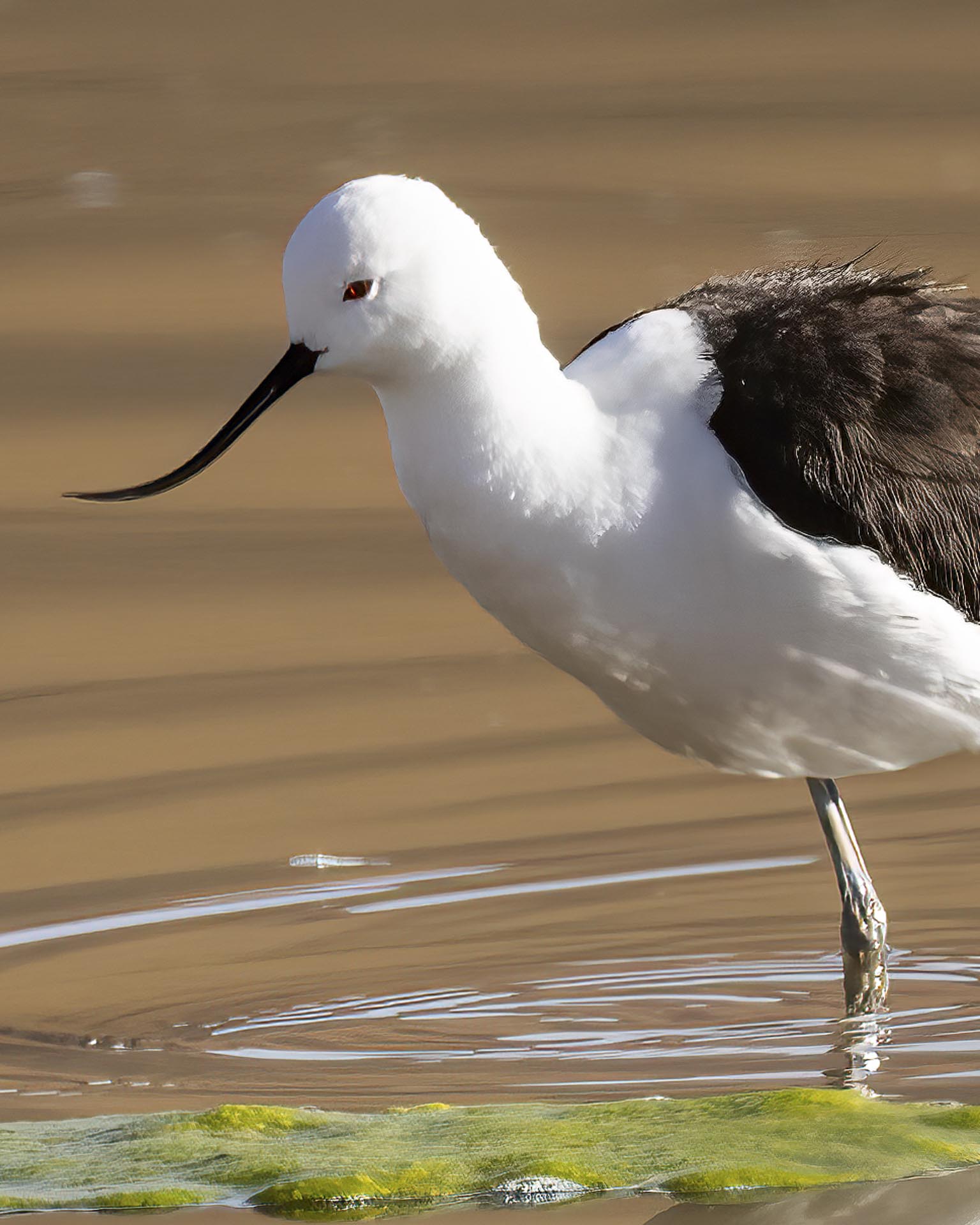
The Altiplano, Puna or High Andean Plateau above 4,000m, is truly a mecca for wildlife and we will have the whole day to discover its many secrets and stunning landscapes. Established to protect the highest lake in the world (and World Biosphere Reserve), Lauca National Park supports a great diversity of Andean fauna. The high-altitude bogs, locally known as bofedales, hold a remarkable number of species (all endemic to this eco-region), specialties such as all three Chilean species of Flamingo (Chilean, Andean and Puna), the delicate Andean Avocet, Giant and Andean coots, Puna Ibis, Andean Goose, Puna Teal, Rufous-bellied and Grey-breasted Seedsnipes, Andean Avocet, Andean Lapwing, Puna Plover, and the exquisite Diademed Sandpiper-Plover. The surrounding barren plains are a very good habitat for both Puna Rhea and Puna Tinamou. An impressive cast indeed. At 4,500m / 14,763ft, Lake Chungara area will be the highest spot during our entire trip. Surrounded by imposing volcanoes, this is a magnificent place and probably one of the most beautiful views that we will have during our whole Chilean Birding Adventure. Among the species we can find here are Andean Gull, Andean Flicker, Cordilleran Canastero, Puna and White-fronted Ground Tyrants, Andean Negrito, White-winged Diuca Finch and Black Siskin. Overnight in Putre (Breakfast, Lunch, Dinner)(Guide)
In the morning we drive back to Arica. Today we will investigate the bird-rich valleys of Azapa and Chaca, the haunt of specialties such as Croaking Ground Dove, Chilean Woodstar, Peruvian Sheartail, Oasis Hummingbird, Tamarugo and Cinereous Conebills, Bran-colored and Vermillion Flycatchers, Peruvian Meadowlark and the odd-looking Slender-billed Finch. In the afternoon we will comb the productive estuary of the Lluta River in order to study the various coots, egrets, shorebirds, terns and gulls gathered here to roost, usually in large numbers. Overnight Arica (Breakfast, Lunch, Dinner)(Guide)
Early morning we will take a boat trip off Arica to continue our search for the endemic seabirds of the Humboldt Current. We will look for Peruvian Diving Petrel and we may also find Elliot’s and Markham’s Storm Petrels. The delightful Inca Tern will be a common sight around the harbor plus Common and South American Terns. The endangered and local Peruvian Tern is another potential species for the morning. Along the rocky coast south of Arica we expect to see a great array of seabirds including Peruvian Pelican, Peruvian Booby, Guanay and Red-legged Cormorants, the stunning Inca Tern plus Belcher’s and Grey Gulls. Other birds include Little Blue Heron, Willet, Whimbrel, Ruddy Turnstone, Surfbird, Franklin’s Gull and Elegant Tern. We will extend our journey southwards along the coast to the Camarones Gorge where we expect to see Pied-crested Tit-Tyrant and Yellowish Pipit. Overnight Arica (Breakfast, Lunch, Dinner)(Guide)
We will catch a morning flight to Santiago to continue with our exploration of central Chile and its endemic and specialties. (B)(Guide) Birding Chile tours.
Southern Patagonia Post-Extension (6 days)
Easy to moderate walks | From sea level up to 1,000m. / 3,280ft. | 4 ferry rides | Excellent photo opportunities
Birding Chile tours. We will catch an evening fight to Punta Arenas (53°S), Chile’s southernmost city. This can be a truly enjoyable plane journey, as we’ll fly over seemingly endless Patagonian icecaps, deep fjords and the rugged peaks of the southern Andes. After our arrival, we will bird along the coast of the mythic Straits of Magellan looking for Flying Steamer and Crested Ducks, Kelp Goose, King and Rock Cormorant and Magellanic Oystercatcher. The coastal grasslands can produce other interesting sheldgeese including the ubiquitous Upland Goose, the smaller Ashy-headed Goose and the endangered Ruddy-headed Goose. Overnight Punta Arenas (Dinner)(Guide).
This morning, we will take a 2-hour ferry ride across the Straits of Magellan towards the town of Porvenir, in Tierra del Fuego. We will be entertained by an interesting array of tubenoses such as Black-browed Albatross, Southern Giant Petrel, Southern Fulmar, the delightful Cape (or ‘Pintado’) Petrel, White-chinned Petrel, Sooty Shearwater, Wilson’s Storm Petrel and Magellanic Diving Petrel. We will see other seabirds including Magellanic Penguin, Chilean Skua, Kelp and Dolphin Gulls and South American Tern. Possible marine mammals will include the common South American Sea Lion and playful pods of Peale’s Dolphin. Once we land in Tierra del Fuego, we will check the coast where we shall see Crested Duck, Chiloe Wigeon, Baird’s and White-rumped Sandpipers, Magellanic Oystercatcher and Dark-bellied Cinclodes, among several other ‘goodies’.We will continue east to explore the large embayment of Useless Bay (Bahía Inútil), where it is likely to find a wealth of seabirds and other aquatic birds. On route we will be checking for potential raptors including Variable Hawk, Aplomado and Peregrine Falcons. Magellanic Horned Owl nests in some ravines we will pass by. The main target of our visit to this scenic part of the island is the newly established King Penguin breeding colony. This splendid species congregates year-round on this site and they have successfully started to breed and raise young here. Later, and before heading back to Porvenir, we will drive through the shrubby slopes and moorlands of the Baquedano Hills searching for Rufous-chested Dotterel, Austral Canastero and the stunning White-bridled Finch. Overnight Porvenir (Breakfast, Lunch, Dinner)(Guide).
During the morning we will visit some alkaline lagoons east of the village. Our target here will be the local and odd-looking Magellanic Plover. This enigmatic wader looks more similar to a little dove rather than to any shorebird, and is often seen feeding ‘scratching’ the mud with its bright pink legs! Other birds of the area will include Two-banded Plover, Wilson’s Phalarope, the abundant White-rumped Sandpiper, Short-billed Miner and the ubiquitous Austral Negrito. The windswept steppes of Tierra del Fuego and Patagonia hold a number of specialties including Least Seedsnipe, Tawny-throated Dotterel, Short-billed Miner, Band-tailed Earthcreeper and Chocolate-vented Tyrant. A short ferry ride will allow us to be on mainland once again and if we are lucky, to see the striking Commerson’s Dolphin following the wake. Chilean Flamingo, Coscoroba Swan, Silver Teal plus thousands of waders such as Wilson’s Phalarope, Baird’s and White-rumped Sandpipers will be common at the roadside wetlands while we explore and enjoy the beauty of this ‘big sky’ country. On the journey, we should encounter Lesser Rhea, Cinereous Harrier, Cinnamon-bellied Ground-Tyrant and Patagonian Mockingbird. Large herds of camel-like Guanacos will be a common sight along the entire drive towards Puerto Natales and other possible mammals will include Southern Grey (Chilla) Fox, Patagonian Hairy Armadillo and Patagonian Hog-nosed Skunk. Overnight Puerto Natales (Breakfast, Lunch, Dinner) (Guide).
Torres del Paine is one of the gems of Chile and certainly one the most visited parks in Patagonia. We will have the whole day to explore its diverse habitats, but above all, to appreciate the colossal magnitude and rugged beauty of the awe-inspiring granite peaks which name the park.The reed-fringed lagoons of the eastern side of the park will keep us busy during the whole morning. Here we will find a wealth of waterbirds including Great, Silvery and White-tufted Grebes, Ruddy (Andean) and Spectacled Ducks, Speckled Teal, Yellow-billed Pintail, and with luck, the elusive and recently re-discovered Austral Rail. We also hope to see Andean Condors and Black-chested Buzzard-Eagle hovering in these turbulent skies. During the afternoon we will visit Lake Grey to enjoy the stunning sight of its southern shore dominated by stranded blue icebergs. We will scan the fast-flowing rivers hoping to find the remarkable and colourful Torrent Duck. Overnight Puerto Natales (Breakfast, Lunch, Dinner) (Guide).
Early in the morning we will explore the impressive Sierra Baguales Range, located northeast of Torres del Paine. Along the road and in the scrubby gullies, we will look for more restricted-range songbirds in Chile such as Patagonian Mockingbird and Grey-bellied Shrike-Tyrant. As we continue exploring this montane habitat we might find the local White-throated Caracara, Grey-breasted Seedsnipe, Rufous-banded Miner, Cinnamon-bellied and Ochre-naped Ground Tyrants, Patagonian and Greater Yellow Finches and the stunning Yellow-bridled Finch. Overnight Punta Arenas (Breakfast, Lunch, Dinner) (Guide).
Transfer to Punta Arenas airport for our connecting flight to Santiago. End of the trip. (Breakfast). Birding Chile tours.
Tour Leaders |


Not enough time for taking the whole trip? Then consider to join one of the following trip segments |
If you don’t have enough time to do the whole main program of our Birding Chile trip, then you can join one of the following trip sections.
Tour Registration |
To secure your reservation for this trip, please fill out our online registration form. Upon receipt, an initial deposit of 30% of the total trip cost will be requested. The settlement of the remaining balance must be completed no later than 90 days before the departure date.
All payments are made in US Dollars. You have the option to pay by WeTravel (a safe online platform allowing payments with all major credit cards) or by bank transfer. In either case, the commissions are to be assumed by the client.
Terms for Cancellation and Refunds
To cancel a booking, the individual who made the reservation must provide written notice to Far South Expeditions. The cancellation becomes official on the date the correspondence is received. Refund processing is managed in accordance with the following established timeline:
- Cancellations occurring 120 days or more before the scheduled departure: a refund of 70% of the deposit will be issued.
- Cancellations between 119 and 91 days before departure: the trip deposit remains non-refundable, though any further payments toward the balance will be returned in full.
- Cancellations made 90 days or fewer prior to the departure date: no refund of any kind is available.
These Terms for Cancellation and Refunds are equally applicable to all pre-tour and post-tour extensions, including any requests for trip transfers. To safeguard your investment against unforeseen circumstances, the purchase of comprehensive travel insurance is highly recommended.
Weather Considerations:
Please note that all boat trips are subject to weather conditions. Delays or cancellations may occur, which could potentially alter the planned sequence of your itinerary. We appreciate your patience and flexibility under these circumstances.
Reminder: Kindly ensure the final balance is settled by the due date to maintain your reservation.