

At Far South Expeditions, we are driven by a passion for exploring and sharing Chile’s astonishing biodiversity. Today, we invite you to discover a very special species: the Chilote fox (Lycalopex fulvipes). This small canid, found only in our country, is the smallest of all foxes in Chile, making any sighting a true privilege of nature.
The Smallest of Chile’s Foxes
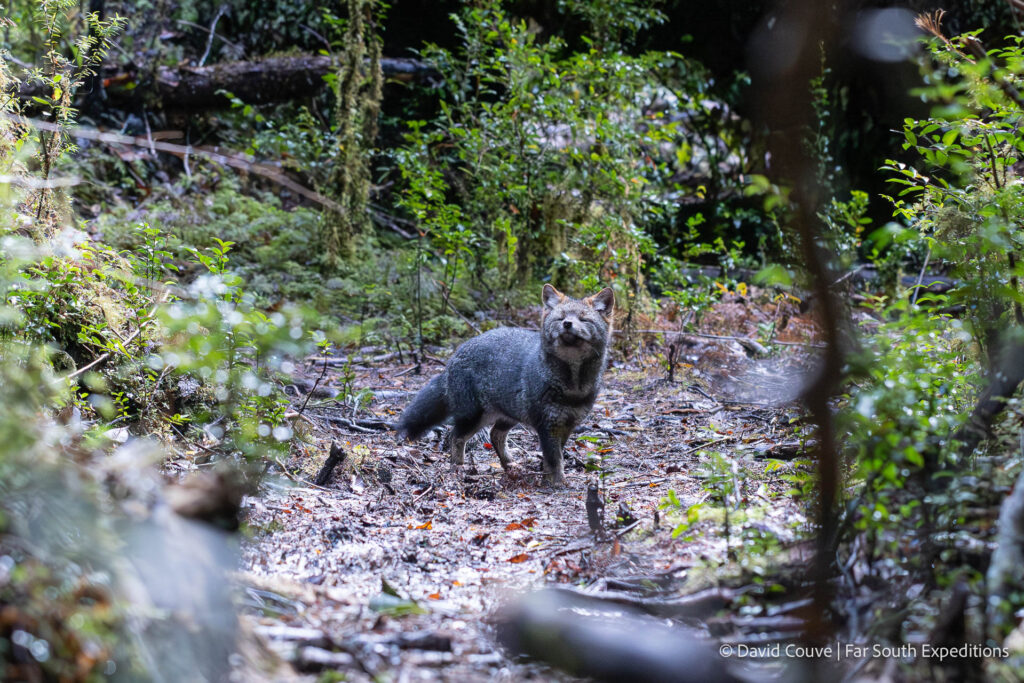
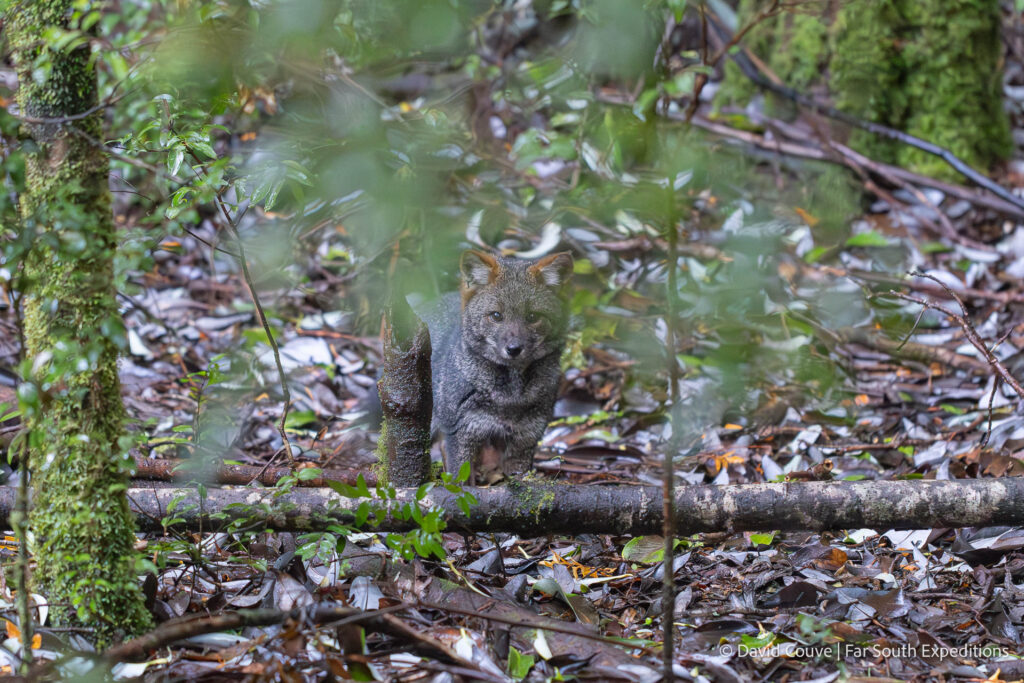
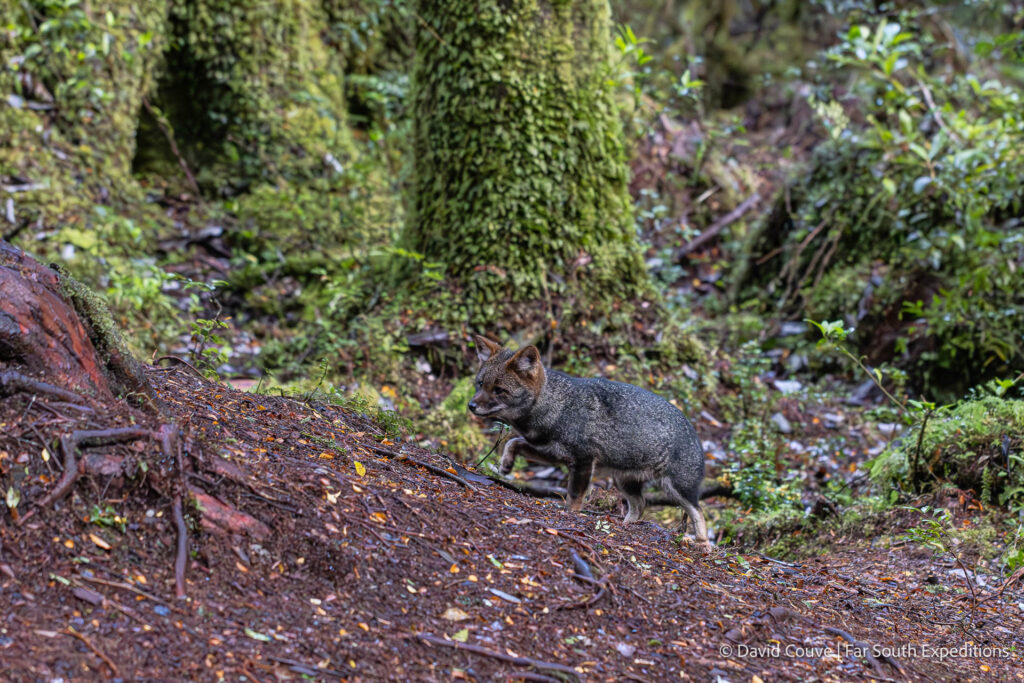
Also known as Darwin’s fox, this carnivore is one of the rarest and least known mammals on the planet. It measures between 48 and 59 cm in length, with a bushy tail that can reach up to 25 cm. Its dark coat, almost black along the back, reddish ears, and brownish belly give it a robust and distinctive appearance, quite different from other Chilean foxes such as the culpeo or the South American gray fox.
A Top Predator
Despite its small size, the Chilote fox is a top predator in its ecosystem. Mostly nocturnal and solitary, it is primarily carnivorous by nature but has an opportunistic and varied diet. It feeds on small mammals (such as rodents and the monito del monte), birds, amphibians, reptiles, and invertebrates. It also consumes a variety of fruits and insects, playing an important role in seed dispersal and the natural control of rodent populations.
Conservation Status
The Chilote fox is listed as Endangered by the International Union for Conservation of Nature (IUCN). Major threats include habitat degradation, attacks and disease transmission from domestic dogs, illegal hunting, and the presence of invasive exotic species.
Added to these are the impacts of climate change, which may alter prey availability and habitat structure.

Did You Know…?
The Chilote fox—known in English as Darwin’s fox—was discovered by the renowned naturalist Charles Darwin in 1834 during his voyage aboard HMS Beagle, specifically on Chiloé Island. Initially, Darwin classified it as a subspecies of the South American gray fox (Lycalopex griseus), but later genetic studies confirmed it to be a completely distinct species, endemic to Chile.
In his book The Voyage of the Beagle, Darwin recounts:
“…we arrived at San Pedro Island, where we found the Beagle anchored. Rounding the point, two of the officers went ashore to measure some angles with the theodolite. Seated on the rocks was a fox (Canis fulvipes), a species peculiar to the island and very rare there, and which is a new species. So intent was it on observing the work of the officers that I was able to approach it from behind and kill it with my geological hammer.”
This was the first official record of the species. At that time, the only way to study wildlife was by capturing—or often killing—the specimen.
Restricted Distribution in Southern Chile
Until 2014, it was believed that the Chilote fox inhabited only two areas of Chile: the mountainous region of Nahuelbuta National Park and Chiloé Island. However, more recent records have confirmed its presence in places like Puerto Octay and the Valdivian Coastal Reserve.
Even so, its range remains restricted in southern Chile, and its populations are isolated, separated by natural barriers such as rivers and by landscapes transformed by human activities.
The conservation of this species is crucial not only because of its rarity and endemism but also because of its ecological importance: it helps disperse seeds by feeding on fruits and contributes to controlling rodent populations.

Leave a Reply
Your email is safe with us.