

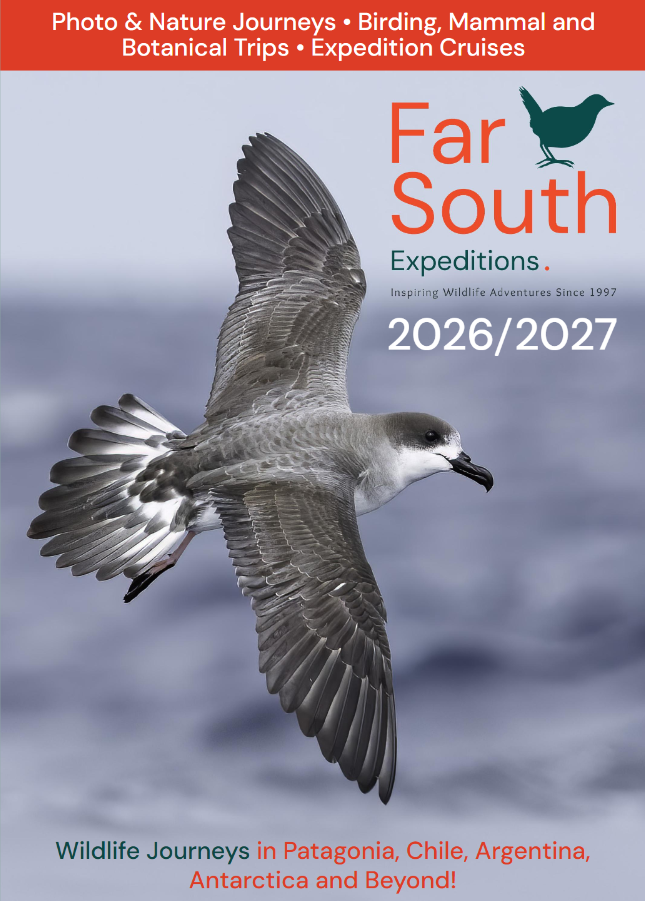
At Far South Expeditions, we are pleased to introduce the featured species of our catalog: the elegant and mysterious Juan Fernández Petrel, one of the most endangered seabirds on Earth. This graceful pelagic bird, known for its silent and agile flight, often goes unnoticed. Yet, for those fortunate enough to observe it in its element, it is a true oceanic treasure. By highlighting this species, we not only celebrate its striking beauty and iconic character, but also aim to draw attention to its delicate conservation status.
A Featured Species of the New Catalog
In recognition of its uniqueness, ecological vulnerability, and strong ties to Chile’s oceanic ecosystems, the Juan Fernández Petrel has been selected as our Species of the Year and featured on the cover of the 2026–2027 Far South Expeditions catalog. This choice shines a light on a remarkable, endemic species that, while still little known beyond the scientific world, holds significant natural and symbolic importance. Through this spotlight, we invite you to explore the rich biodiversity of Chile’s islands and to take part in efforts to protect it.
A Pelagic and Migratory Seabird
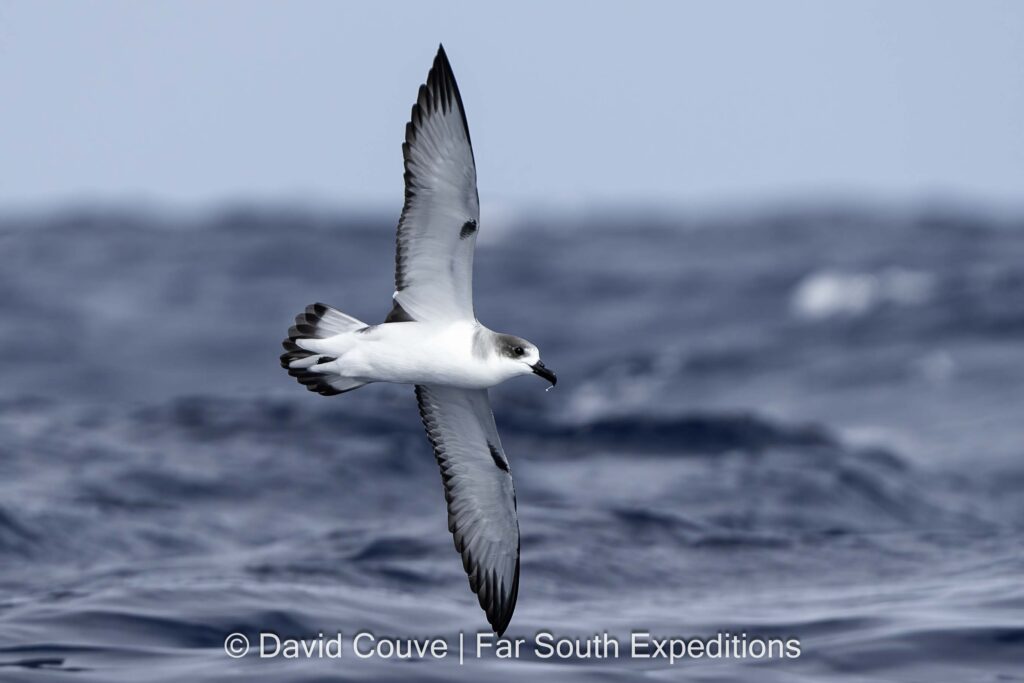
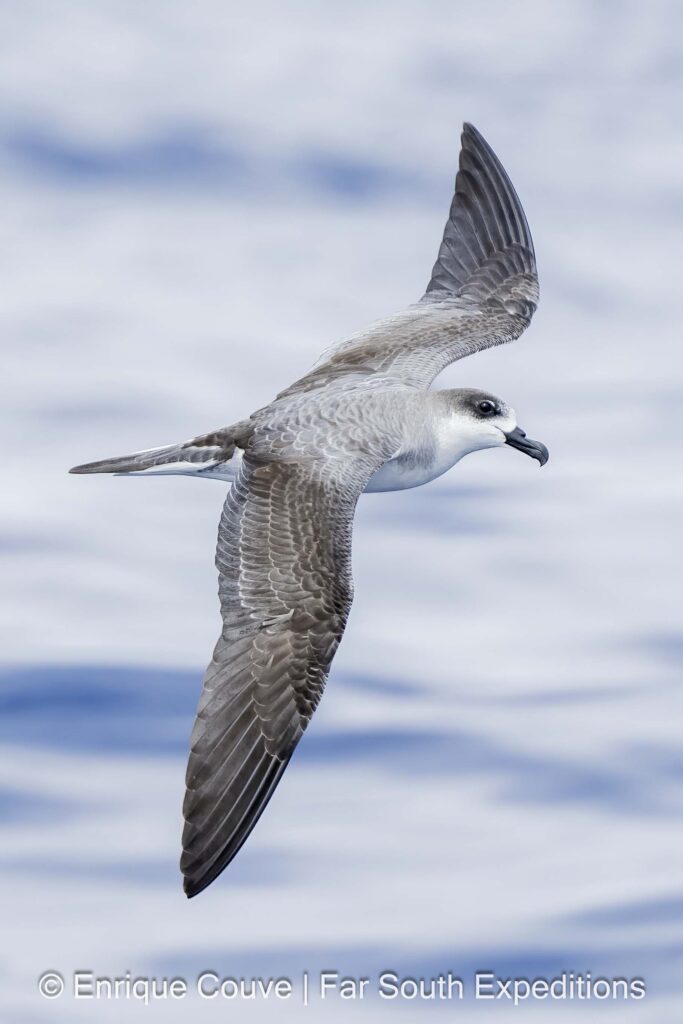
The Juan Fernandez Petrel (Pterodroma externa) belongs to the Procellariidae family and is a medium-sized seabird, measuring between 40 and 43 cm in length, with a wingspan of around 95 to 100 cm. It has dark upperparts and a pale underside, along with a distinct dark marking across its face that gives it a masked appearance.
It is part of a group of seabirds known for their extraordinary ability to travel long distances. With long, slender wings designed for gliding, this species can soar for days without resting, riding the marine winds across vast stretches of the Pacific Ocean.
Highly pelagic in nature, the petrel feeds far offshore and is seldom seen near land outside the breeding season. Its diet includes squid, small fish, and crustaceans, which it catches by skimming low over the ocean’s surface.
For much of the year, this bird remains at sea and has been recorded as far north as the coasts of Peru, Ecuador, Colombia, and even Mexico.
A Hidden Life Among the Cliffs
Although the Juan Fernandez Petrel spends most of its life over the open ocean, it returns to land solely to breed—nesting only on Alejandro Selkirk Island, the westernmost island of the Juan Fernández Archipelago. During the non-breeding season, it migrates north to the Tropical Eastern Pacific. This geographic isolation has made it a powerful symbol of Chilean island biodiversity and endemism.
The breeding season begins in mid-year, when the petrels return to their remote, mountainous nesting colonies. There, they dig burrows into soft, humid soils, often sheltered by native vegetation such as the tree fern Dicksonia externa.
Each pair lays a single egg per season and shares incubation duties over a period of approximately 50 days. This shared responsibility is typical of species that must travel long distances in search of food.

Did You Know?
While one member of the pair incubates the egg, the other may travel as far as 4,166 kilometers from the colony before returning to switch roles.
Conservation Status
Sadly, the Juan Fernández Petrel faces serious threats. The introduction of invasive species such as rats, cats, and goats has had a devastating impact on its nesting colonies—predating eggs, chicks, and even adults, leading to a sharp population decline.
According to the International Union for Conservation of Nature (IUCN), the species is currently listed as Vulnerable (VU). Still, there is hope: conservation programs led by local and scientific organizations are actively working to control invasive species, restore native habitats, and monitor nesting sites to ensure the survival of this remarkable seabird.
Discover Our New Catalog and Join the Adventure
We invite you to explore much more in our brand-new 2026–2027 Far South Expeditions Catalog. Inside, you’ll find our newest and most exciting journeys, fresh expedition ideas to inspire your next trip, and exclusive offers tailored for those eager to explore the most awe-inspiring corners of southern South America—including Chile, Patagonia, and beyond.
It’s a perfect opportunity to dream, plan, and embark on your next great experience with us.
And don’t forget—we’ll be at the Global Bird Fair in just one week! [Read more here]


Leave a Reply
Your email is safe with us.