

During the austral summer, many of the birds observed along the Chilean coast participate in one of nature’s greatest spectacles: migration. Each year, numerous species travel thousands of kilometers to reach the beaches, wetlands, and estuaries of this extensive coastline, where they find essential sites to rest, feed, and continue their journey.
Many of these birds follow the Pacific Flyway, a major migratory route connecting breeding grounds in the Northern Hemisphere with the coastal habitats of South America. With more than 4,200 km of coastline, Chile serves as a true natural laboratory for coastal life and an exceptional destination for travelers in search of unique wildlife. Among these migrants are the plovers, a fascinating group of shorebirds that visit or inhabit a variety of ecosystems across the country.
Migration: An Extraordinary and Challenging Event
Migration is undoubtedly one of the most extraordinary phenomena in nature. From ocean giants animals like whales to tiny shorebirds, countless animals undertake transcontinental journeys every year. For birds, these movements can span thousands of kilometers, during which they must face shifting weather, food scarcity, and the immense challenge of navigating routes followed by their ancestors for generations.
In simple terms, migration is the seasonal movement between breeding grounds and non-breeding (feeding or resting) areas. This process connects distant ecosystems, allowing species from opposite ends of the planet to meet along the same shorelines.
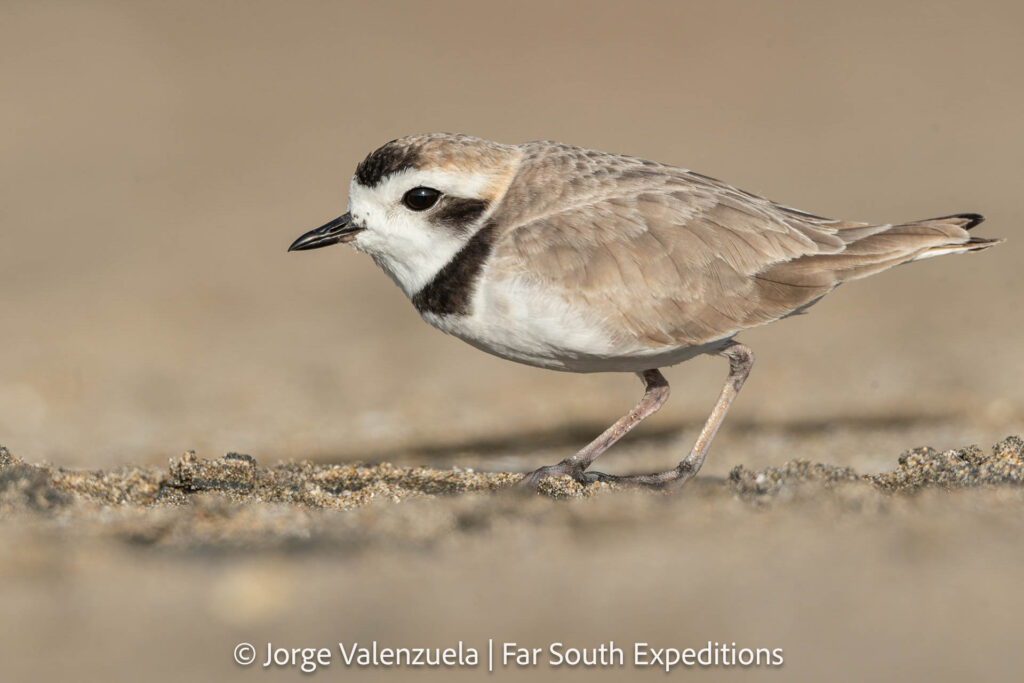
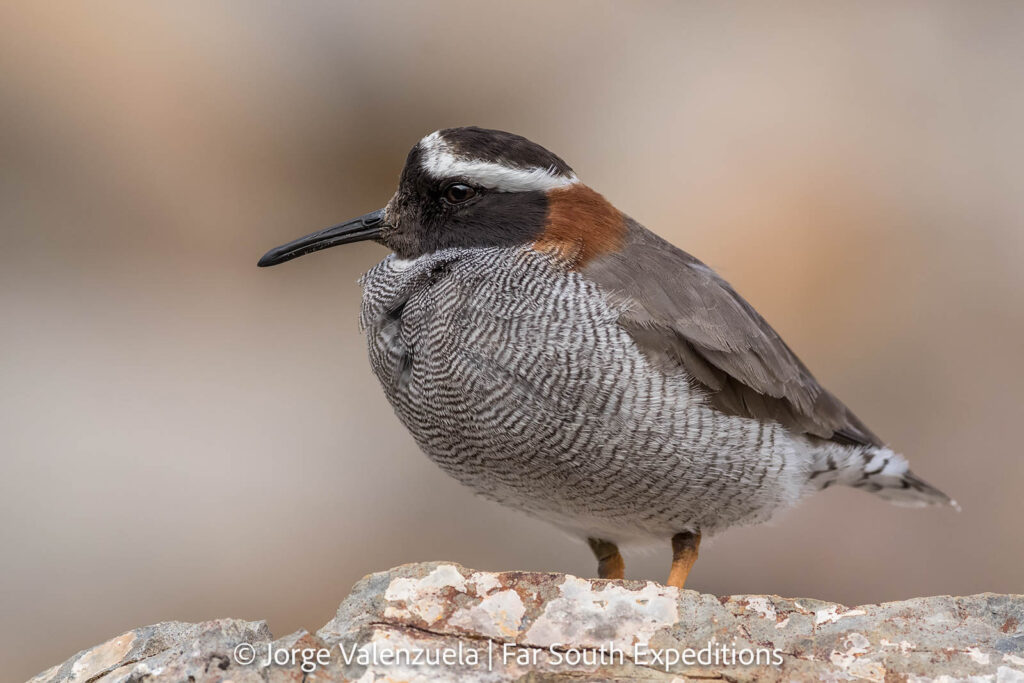
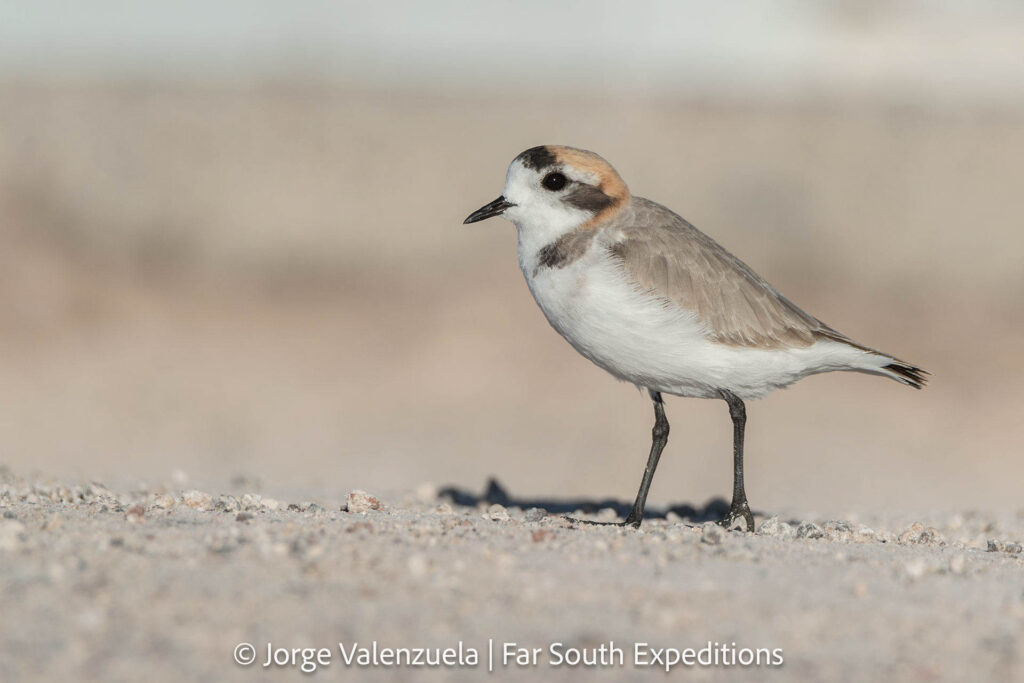
Plovers: Shorebirds of Coastal Ecosystems
Plovers belong to the order Charadriiformes, a diverse group of birds primarily associated with coastal environments, wetlands, and intertidal flats. Within this order, two distinct lineages are present in Chile:
– Family Charadriidae: Includes most of the world’s plovers and lapwings.
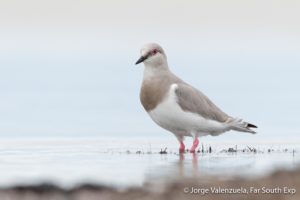
– Family Pluvianellidae: Represented by a single, unique species: the Magellanic Plover.
Generally, plovers are small to medium-sized birds with relatively long legs and short bills adapted for feeding on small invertebrates. They are commonly seen darting across sand or mudflats, constantly scanning the ground to detect prey by sight.
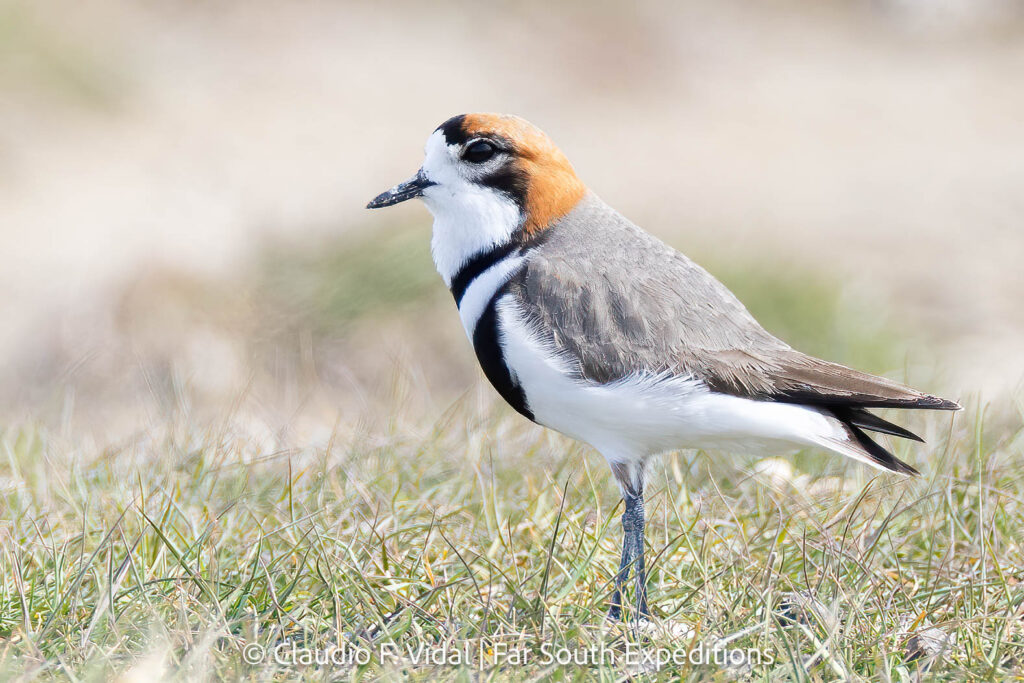
Two Very Different Evolutionary Histories
Although many plovers appear similar at first glance, they actually represent very different evolutionary paths.
The Charadriidae Family: Plovers of the World
The family Charadriidae is cosmopolitan, with species distributed across nearly every continent. In Chile, several species arrive annually during the austral summer from the north, including:
– Semipalmated Plover (Charadrius semipalmatus)
– Killdeer (Charadrius vociferus)
– American Golden Plover (Pluvialis dominica)
– Black-bellied Plover (Pluvialis squatarola)
Alongside these northern migrants, Chile also hosts resident plovers or those that perform regional migrations within South America, such as:
– Rufous-chested Plover (Charadrius modestus)
– Diademed Sandpiper-Plover (Phegornis mitchellii)
– Snowy Plover (Anarhynchus nivosus)
– Two-banded Plover (Charadrius falklandicus)
– Puna Plover (Anarhynchus alticola)
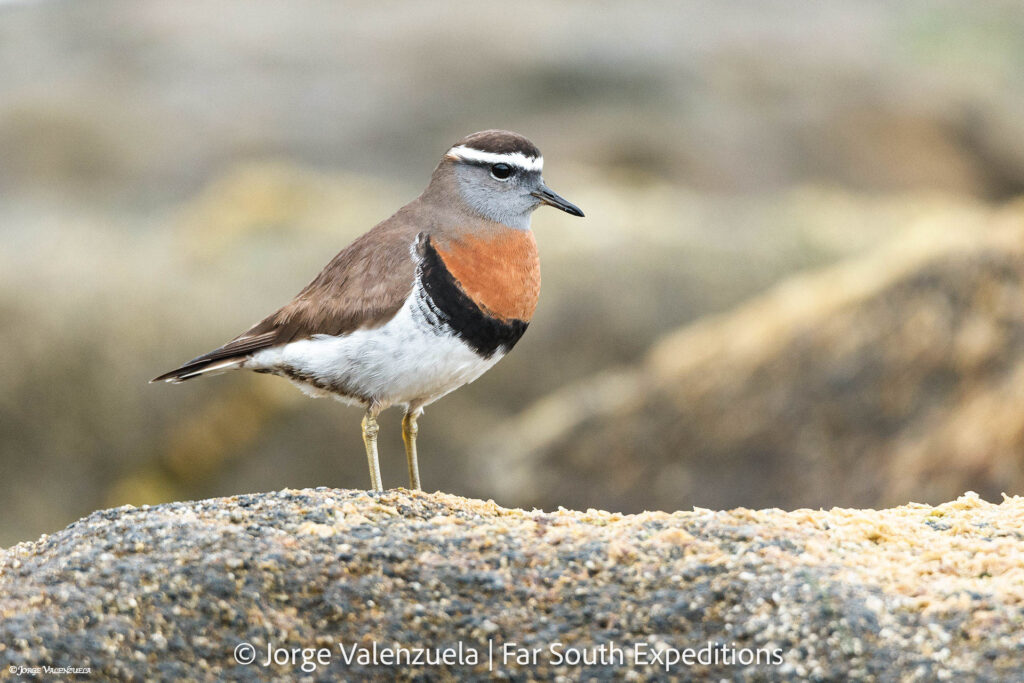
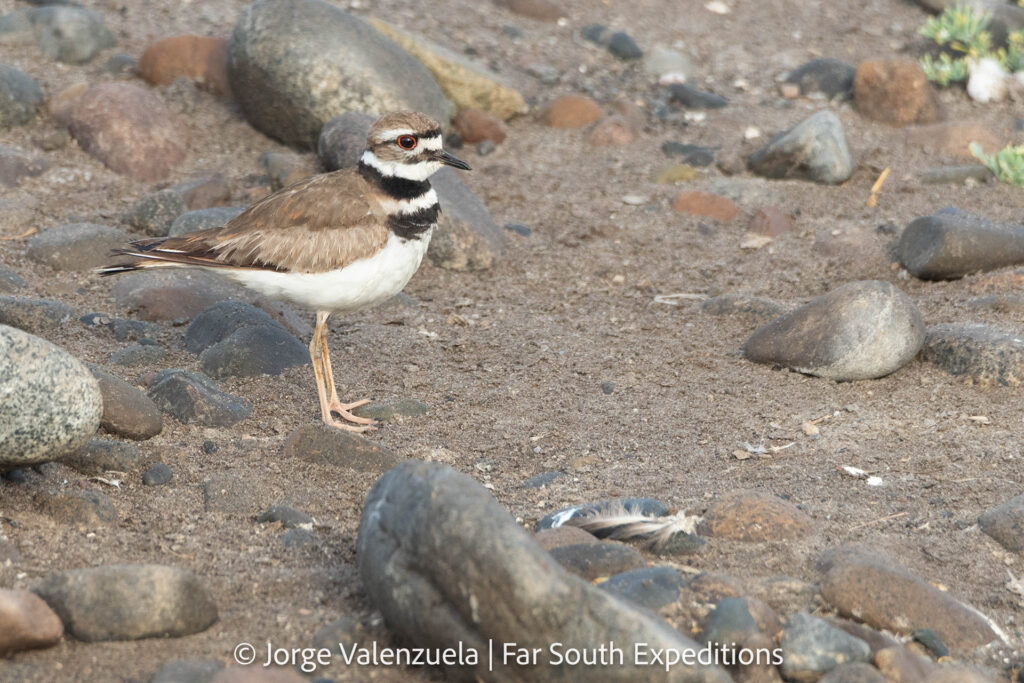
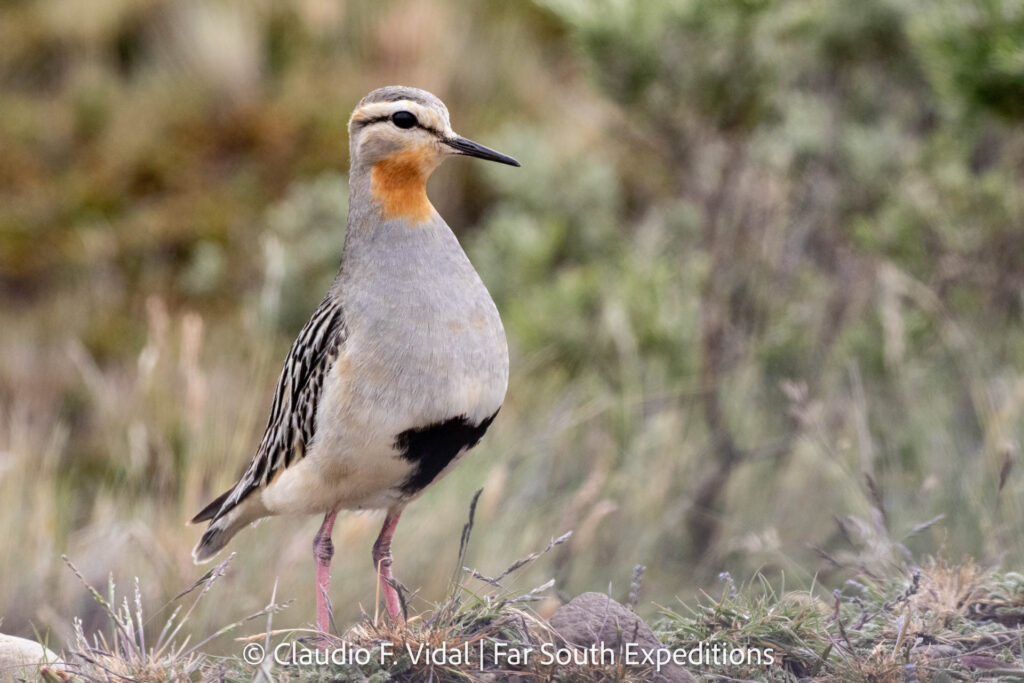
Pluvianellidae: A Unique Lineage
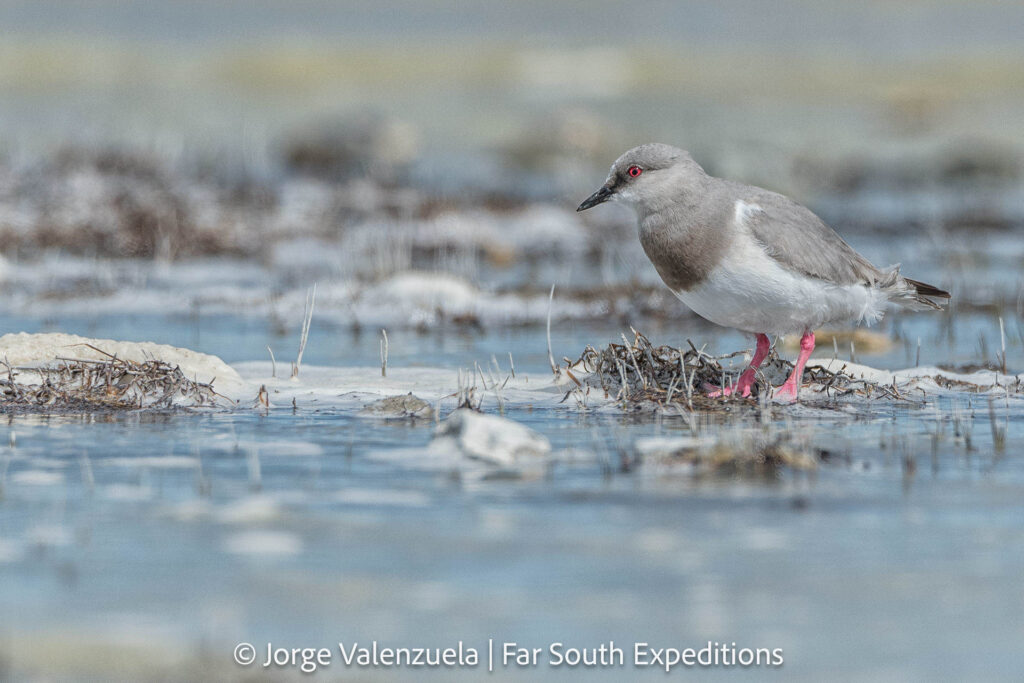
In contrast, the family Pluvianellidae represents one of the most distinct lineages among shorebirds. It contains only one species: Magellanic Plover (Pluvianellus socialis), which is endemic to southern Patagonia and Tierra del Fuego.
For decades, its evolutionary relationships puzzled ornithologists because it shares traits with several different groups. Today, it is recognized as the sole member of its own family, reflecting millions of years of evolutionary isolation. (To learn more about its conservation status, [click here] to read our dedicated post).
How Do Plovers Feed?
Unlike other shorebirds that rely on touch such as sandpipers that probe their bills into the mud, plovers are visual hunters. Their feeding behavior is distinctive and rhythmic: they run briefly, stop suddenly, and then peck at the ground. This pattern is known as the “run–stop–peck” method.
The Magellanic Plover, however, employs a unique strategy. Instead of simply pecking, it uses its feet to scratch and disturb the substrate in circular movements, unearthing larvae and small crustaceans hidden beneath the surface.

Leave a Reply
Your email is safe with us.