

This year, we witnessed one of the most remarkable biological events on the planet: the blooming of the world’s driest desert, right here in Chile. Our team at Far South Expeditions was on the ground to document the explosion of colors and the incredible diversity of flora that briefly transforms this arid landscape into a place of full life.
During September, part of our team traveled to northern Chile to lead our “Coastal Atacama Desert” expedition, a journey designed to discover and explore the driest desert on Earth. Across coastal slopes, ravines, and wide open plains, we went in search of cacti, wildflowers, and the striking bursts of color that emerge when the right climatic conditions come together.
In this new blog post, we spoke with one of our guides, Jorge Valenzuela, who shared details about the expedition and this extraordinary natural event that completely transforms the coastal desert landscape of Atacama.
Cacti: Masters of Survival in Extreme Drylands
Can you imagine a place so dry and arid that life seems impossible at first glance? Even in such extreme environments, resilient species such a cacti (Family: Cactaceae) find a way to survive. They are among the most abundant plants in the desert, with and impressive variety of species.
These plants accumulate large amounts of water in their stems and instead of leaves, have spines that reduce water loss, shield their plant apex (or growing tip) from ultraviolet radiation, and protect them from predators. It’s truly astonishing how evolution has shaped their survival strategies.
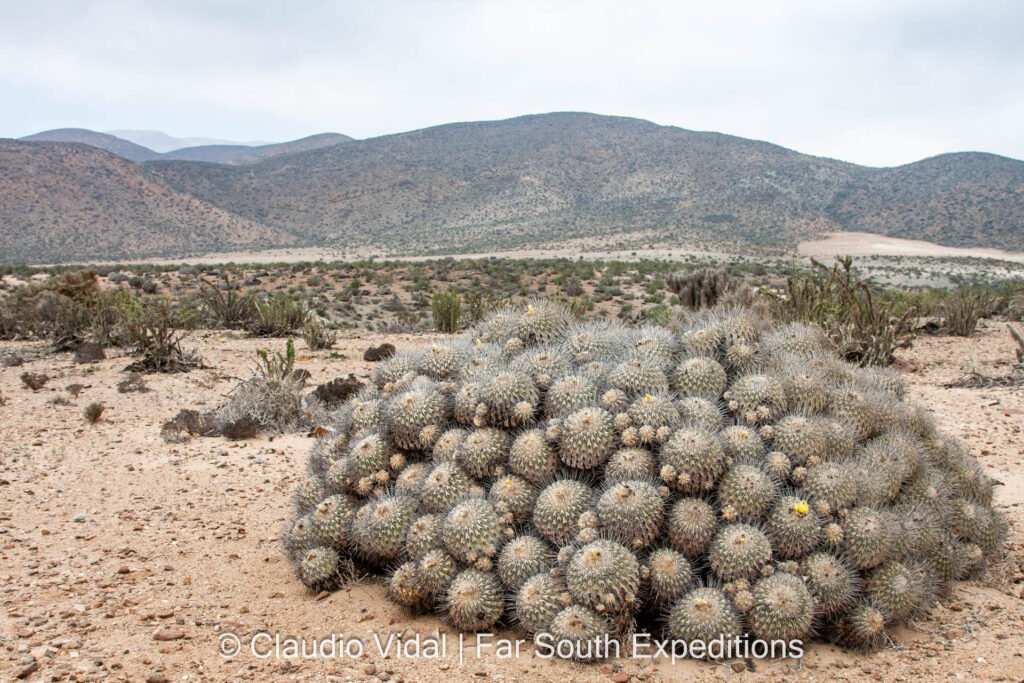
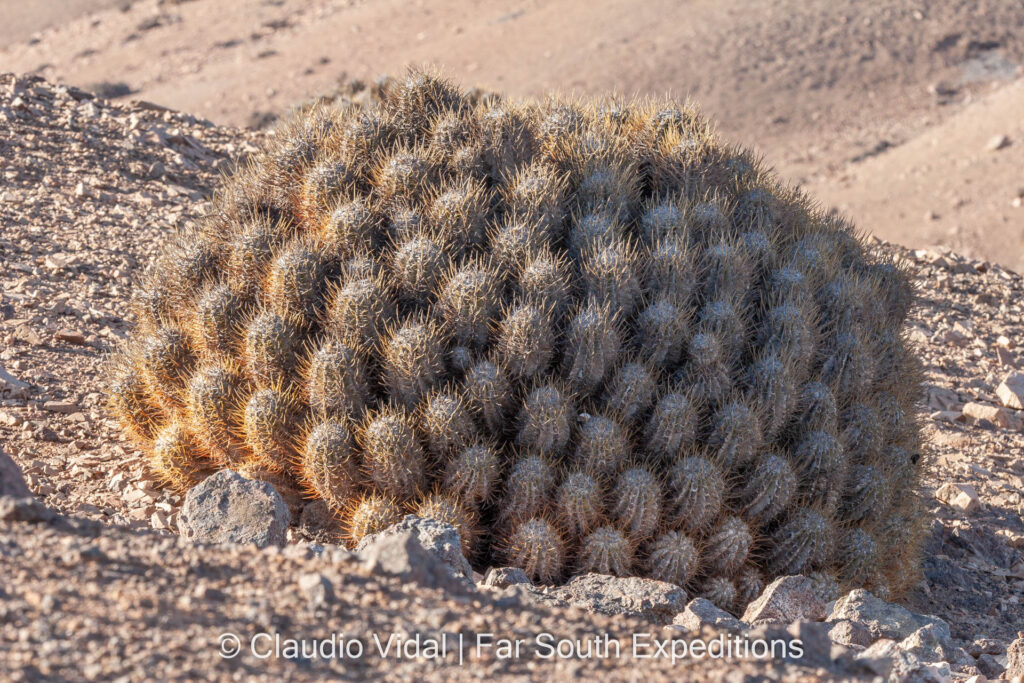
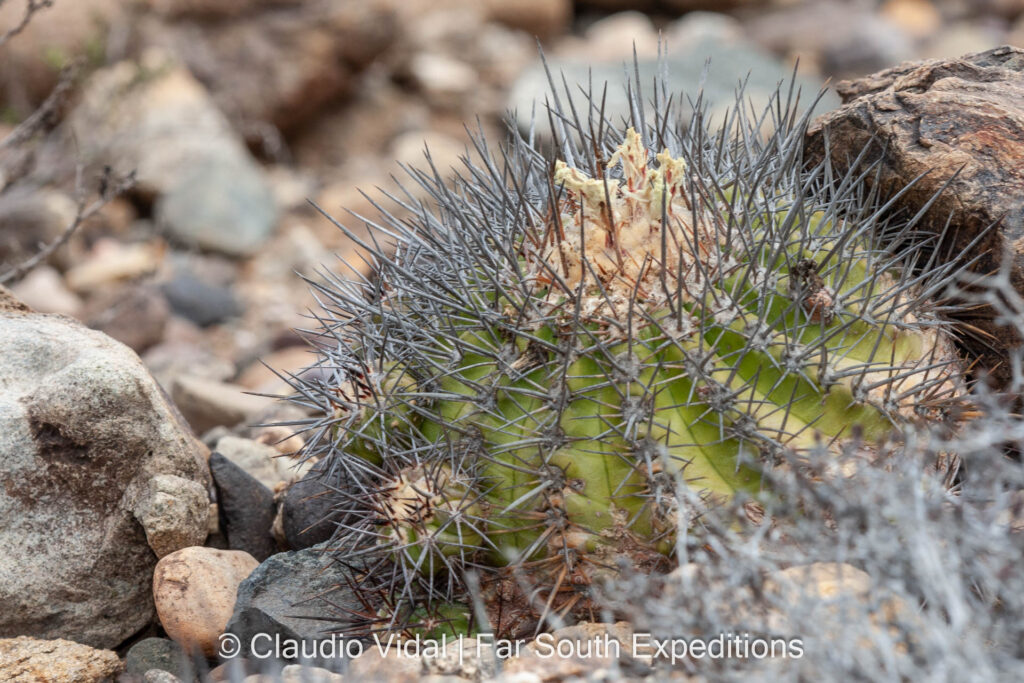
During the expedition, Jorge told us that cacti of the genera Copiapoa and Eulychnia were the most striking and abundant. Here are some photographs of these incredible desert cacti:
A Bloom of Colors
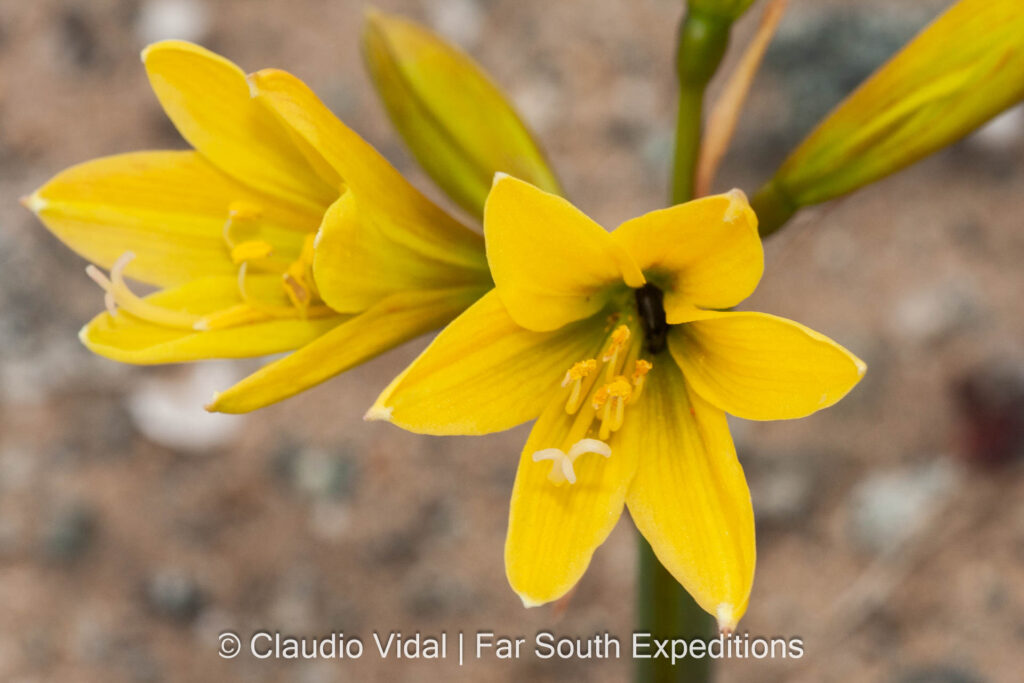
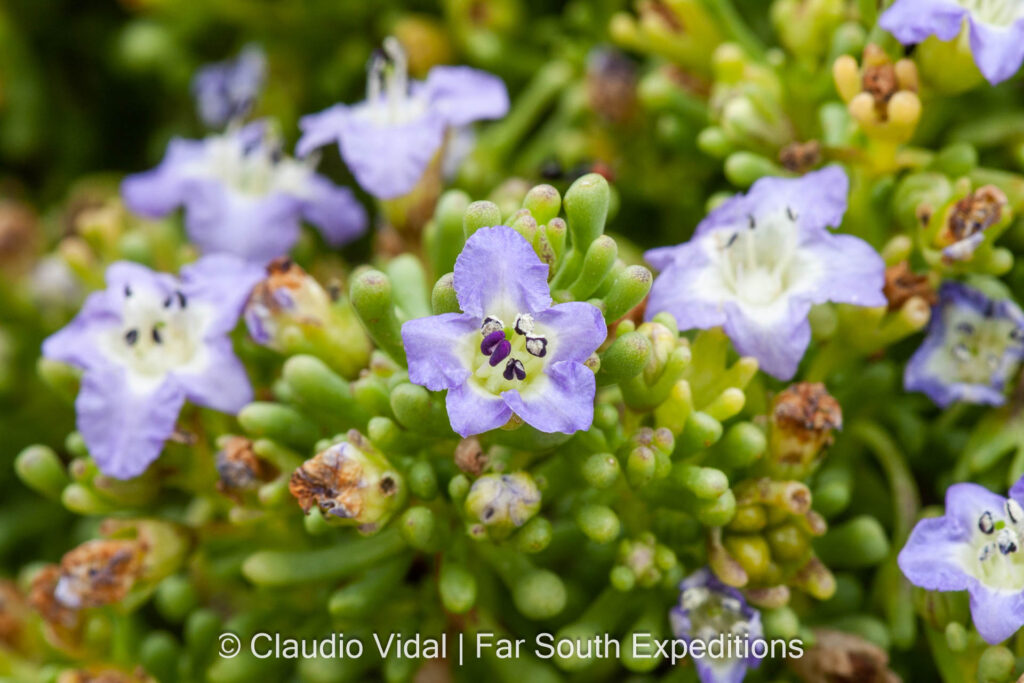
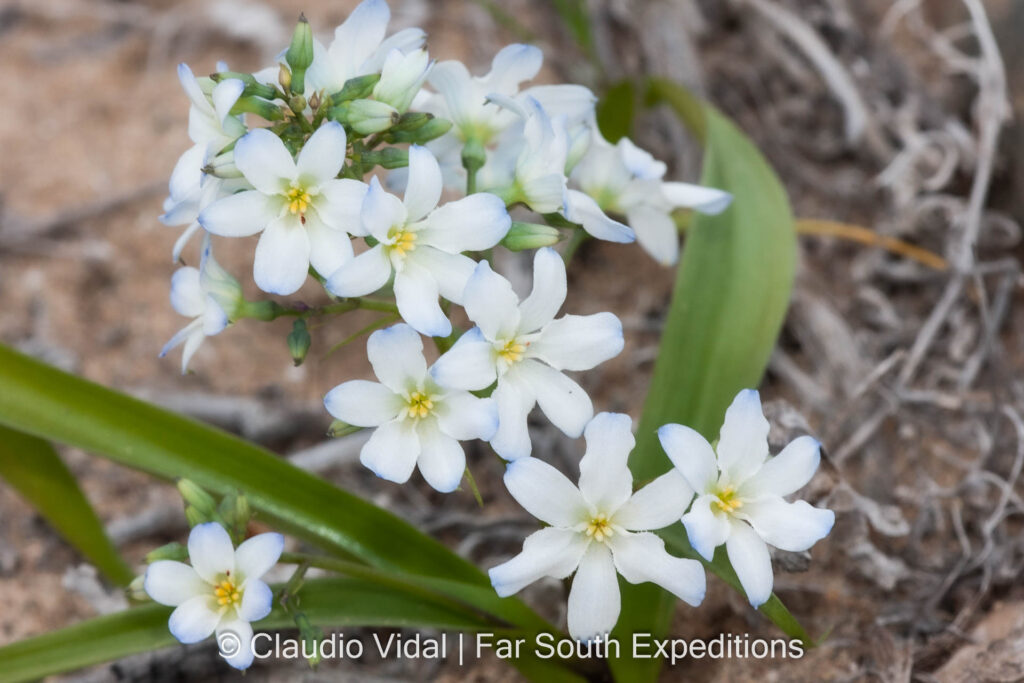
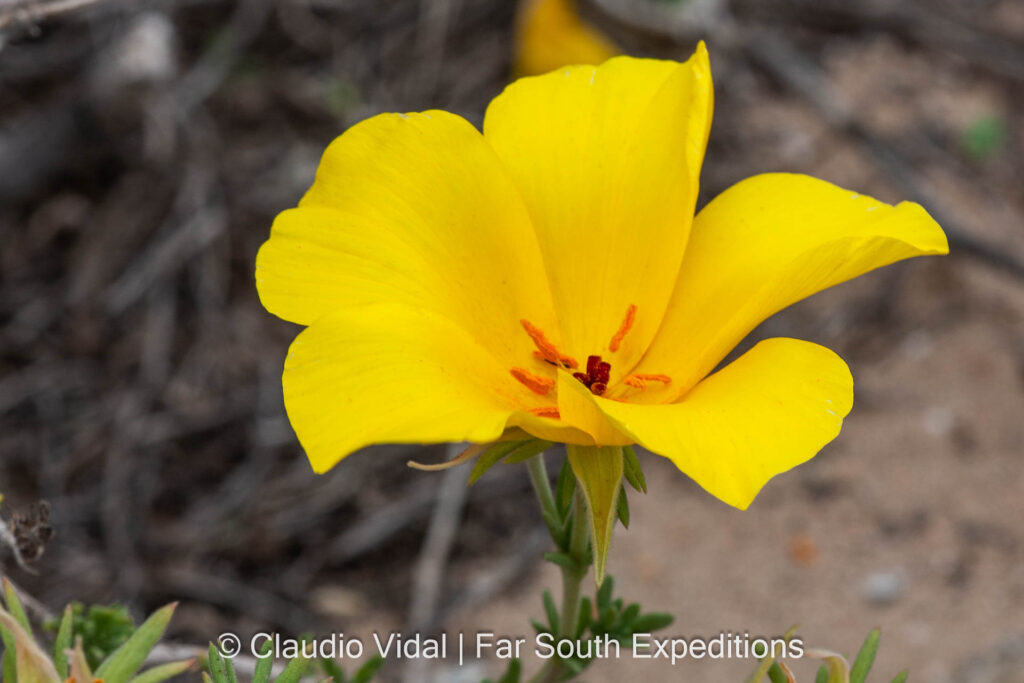
The desert bloom is one of those natural spectacles that feels almost unreal, so impressive and beautiful that it’s hard to believe it’s happening in the driest desert in the world. For it to occurs, very specific weather conditions must align: mainly intense and sustained winter rains over several days. These rains awaken thousands of seeds that have remained dormant beneath the surface for years, waiting for the perfect moment to come back to life.
During these events, up to 200 plants species may sprout, an astonishing diversity that only appears in years when nature provides ideal conditions.
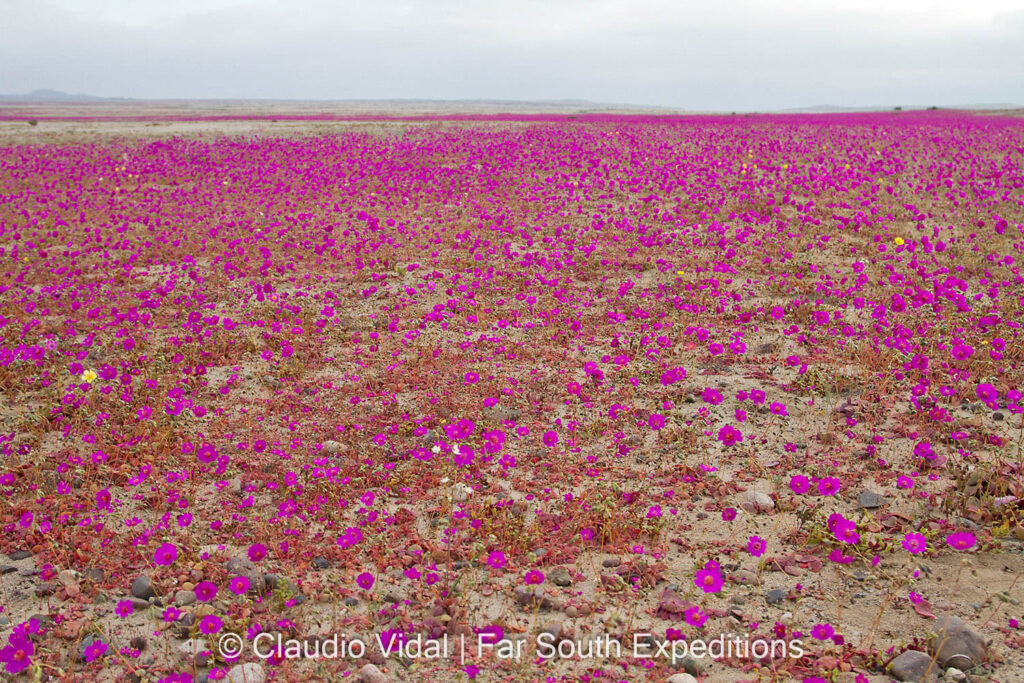
The bloom usually peaks between late September and mid-October, although this can vary depending on the climate.
Once germination begins, the arid landscape of northern Chile transforms into a colorful landscape, covery the slopes, ravines and plains of the coastal desert during the austral spring.
During the expedition, Jorge mentioned that one of the areas visited was Llanos de Challe National Park, where around 60 mm of rainfall was enough to trigger a massive bloom.
In contrast, Paposo Nature Reserve and Pan de Azucar National Park remained much more desert-like, with harsher, drier landscapes and dramatic cliffs that according to Jorge, were equally striking and captivating.
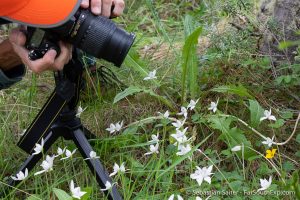
Among the many flowers that appeared, a few instantly stole the spotlight. Favorites included species of the genus Alstroemeria (Familia: Alstroemeriaceae), well know their beauty, unique patterns and delicate structure.
View the full photo gallery from this expedition here:
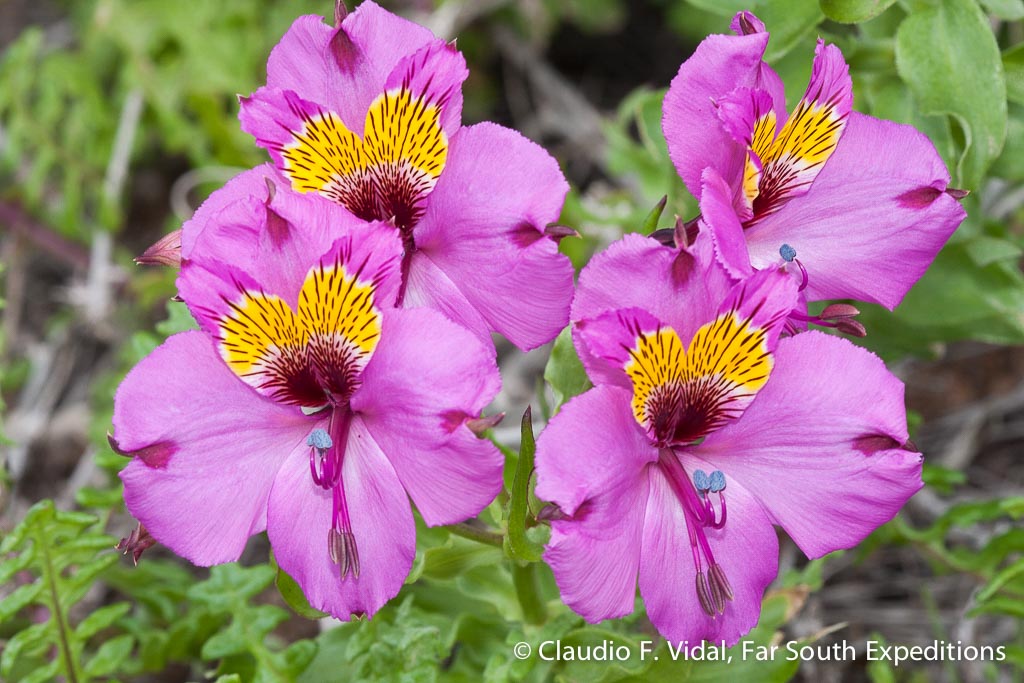
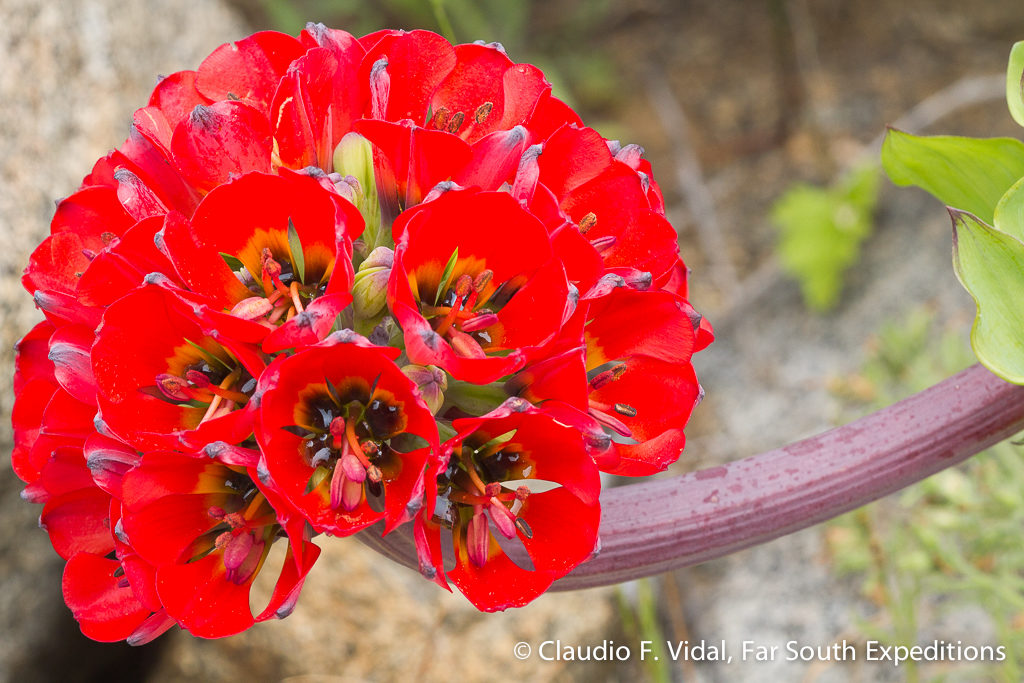
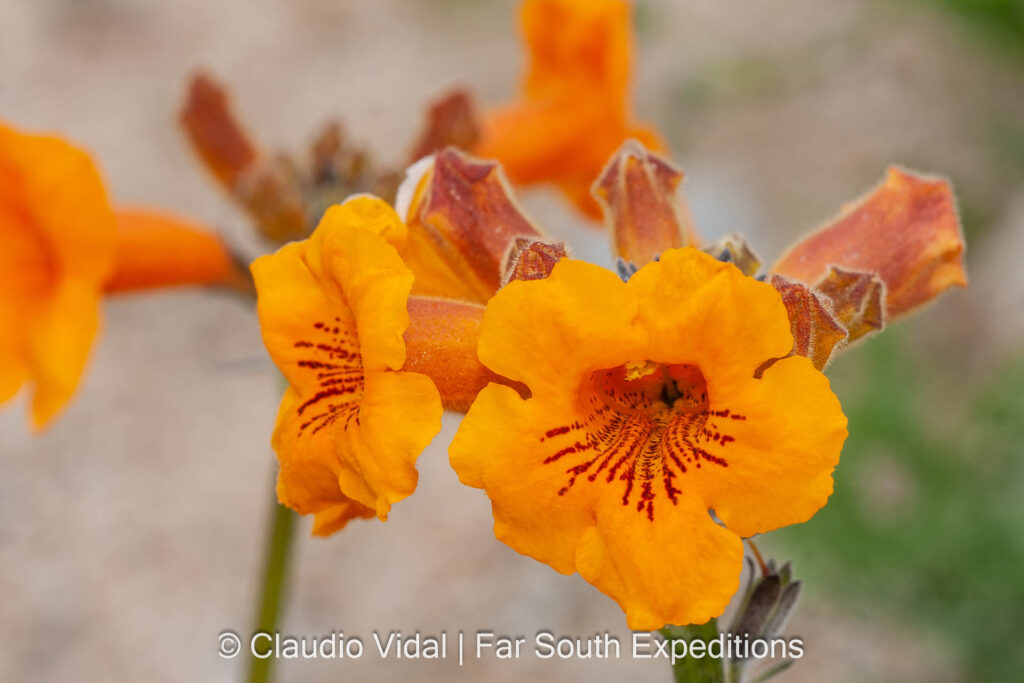
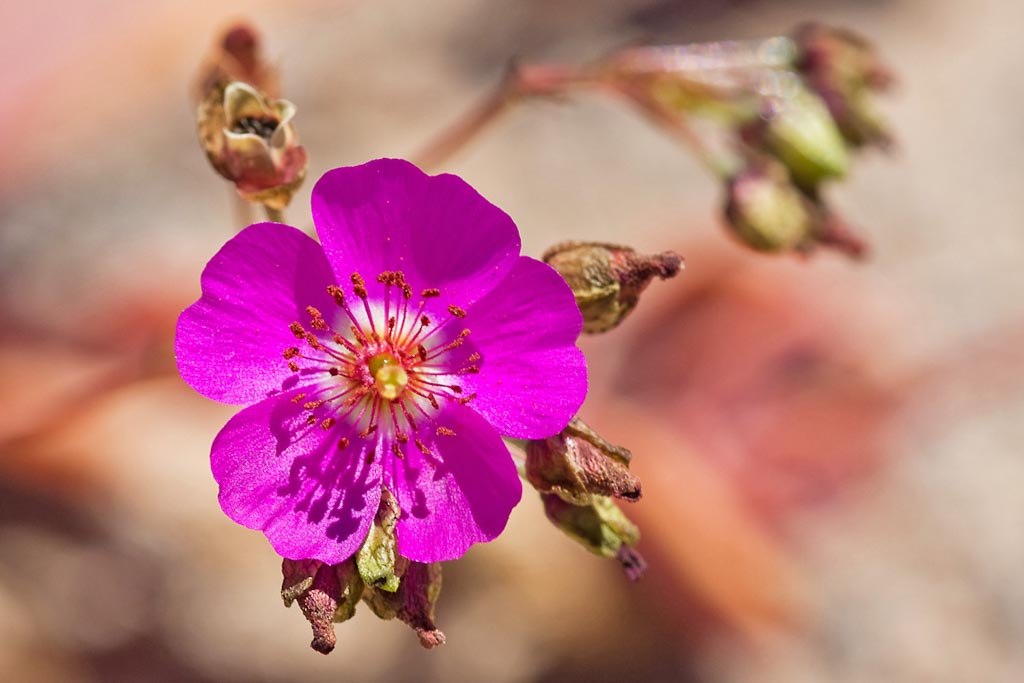
While this is a spectacular sight for any nature enthusiast, it’s important to remember that these ecosystems are fragile. The bloom is brief and easily disturbed, which is why staying on designated trails and moving through the area with care is essential to help these plants thrive year after year.
Many of these flowers also play a key role in attracting local pollinators. As they feed on nectar and pollen, these animals transfer pollen between plants, enabling reproduction and increasing genetic diversity—an essential process for survival in such extreme environments.
This expedition is designed for botanists, naturalists, photographers, and anyone who appreciates the abundance, beauty, and extraordinary floral display offered by nature.


Leave a Reply
Your email is safe with us.