

In the temperate, humid forests of South America lives an endemic amphibian that depends heavily on ambient moisture and the dense understory vegetation: the Darwin’s frog. Its remarkable camouflage and extraordinary reproductive strategy have made it an iconic species for conservation efforts in both Chile and Argentina.
A Camouflage Expert
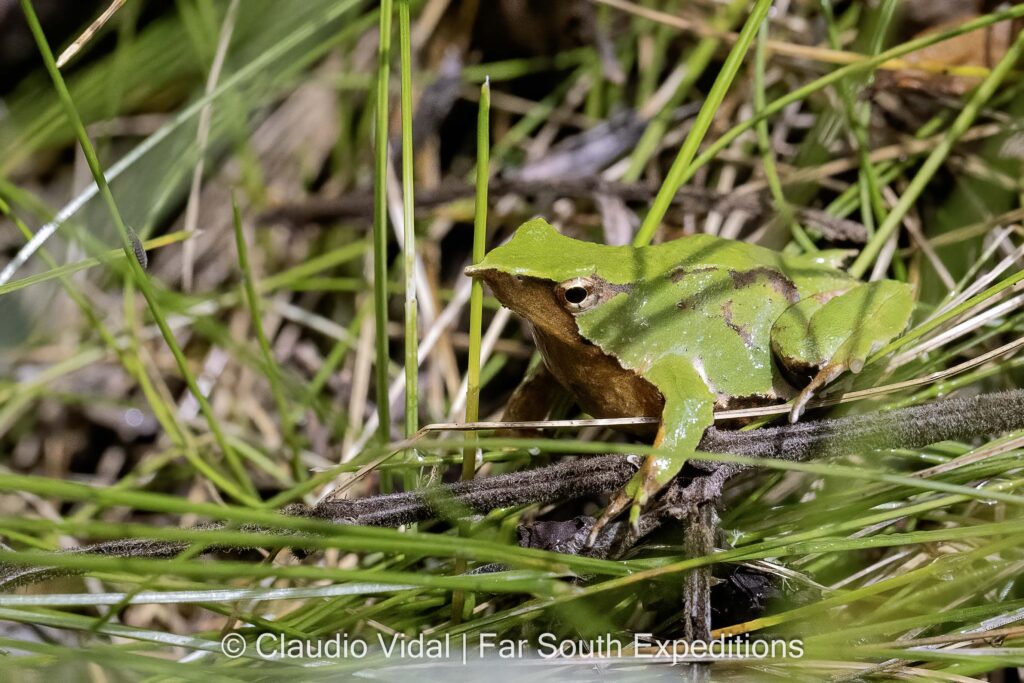
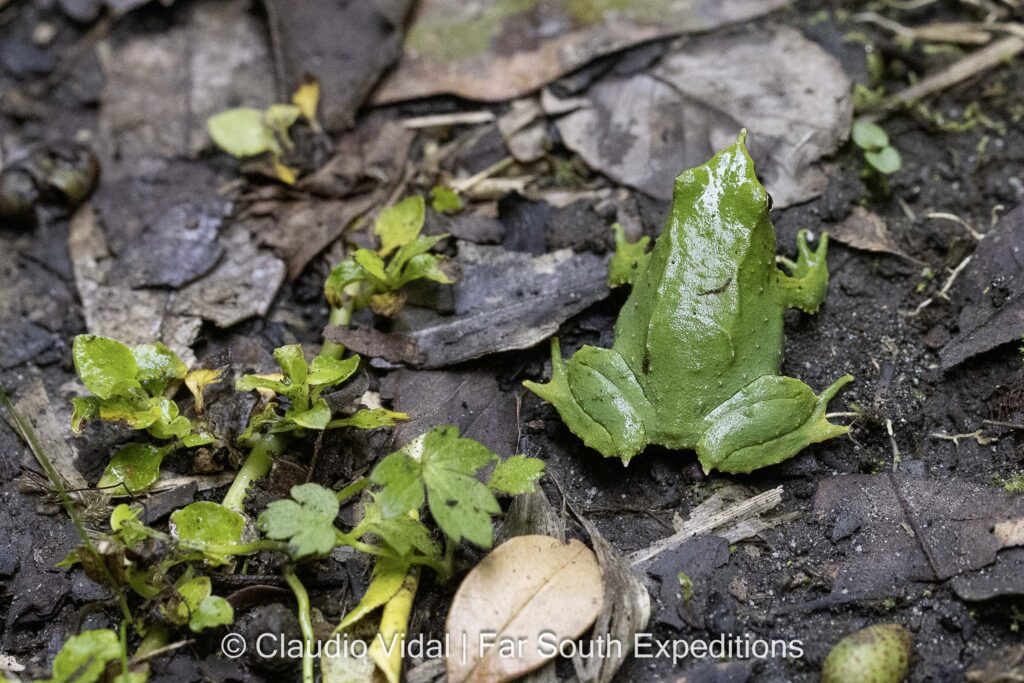
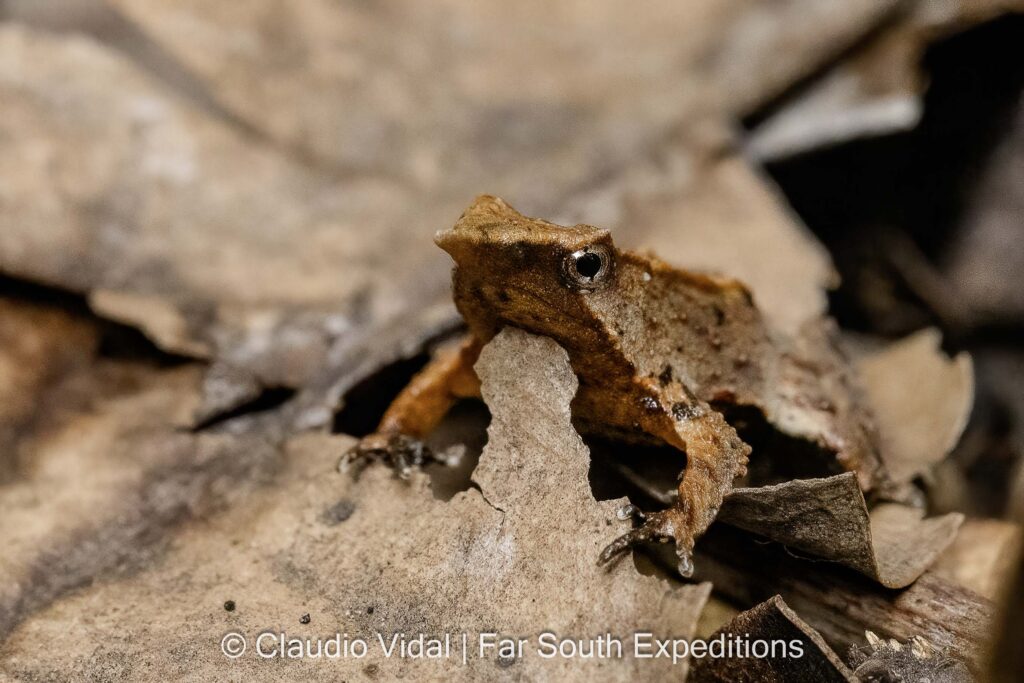
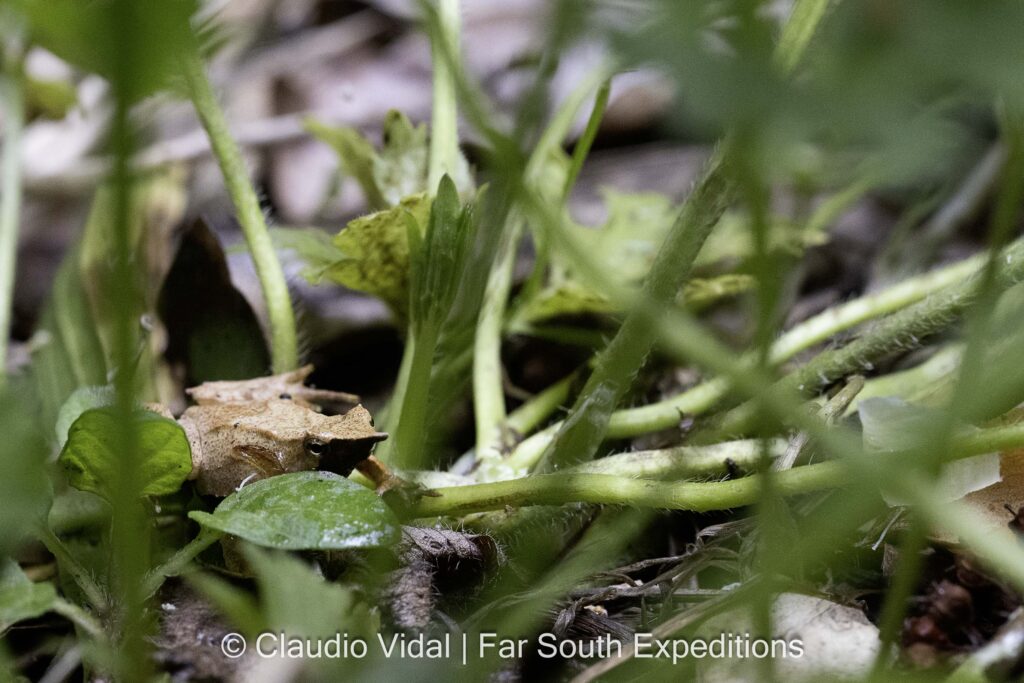
Darwin’s frog (Rhinoderma darwinii) measures just 2 to 3 cm in length. Its dorsal coloration ranges from bright green to dark brown, while the belly is black with irregular white spots. This coloration varies geographically across its range. With its triangular, leaf-like body shape, the frog uses its camouflage to blend into the forest floor.
When threatened, this tiny frog displays a peculiar defense behavior: it performs a short leap and then lies still on its back, mimicking a dead leaf. This strategy—combined with its bold belly pattern—appears to confuse predators.
Natural Predators of Darwin’s Frog
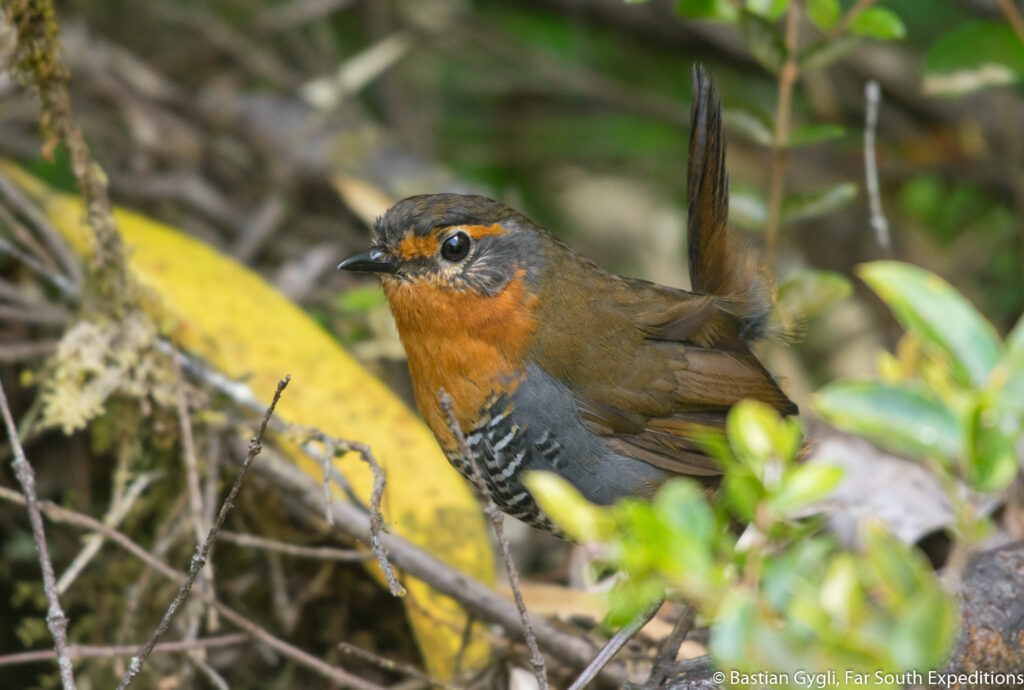
Among the main predators of Darwin’s frog are snakes and certain birds from the Rhinocryptidae family, such as the chucao tapaculo (Scelorchilus rubecula) and the black-throated huet-huet (Pteroptochos tarnii). These birds are ground-dwelling, fly very little, and forage through the understory in search of prey.
Habitat and Distribution
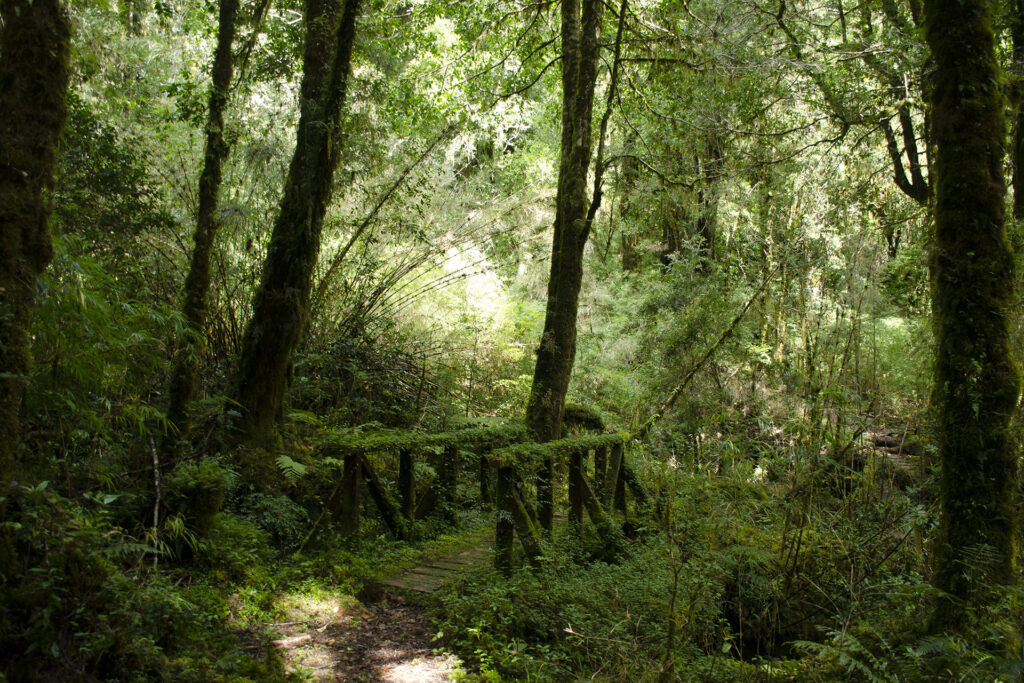
This species inhabits the temperate rainforests of southern Chile and Argentina, especially in ecosystems dominated by native trees such as Nothofagus dombeyi (Coihue beeches), Drimys winteri (Winter’s bark), Luma apiculata (Chilean myrtle), Amomyrtus luma (Luma), Aextoxicon punctatum (Olivillo), and Podocarpus nubigenus (Mañio). Its distribution extends from Chile’s Biobío Region southward into Northern Patagonia.

A Fully Terrestrial Frog
During the day, Darwin’s frog actively moves through the understory, living among mosses, ferns, leaf litter, fallen branches, and other forest floor elements. Unlike most anuran species, Darwin’s frog does not rely on permanent water bodies — such as rivers, streams, ponds, or wetlands — to complete its life cycle. However, it does require a highly humid environment and moist microhabitats to survive and reproduce.
A Unique Reproductive Strategy
One of the most fascinating aspects of Darwin’s frog is its reproductive strategy. After external fertilization, the female lays her eggs in the moist soil of the forest floor. When the embryos begin to move inside the eggs, the male collects them and places them inside his vocal sac, where development continues.
Within this specialized cavity, the embryos undergo metamorphosis, a process that can take more than two months depending on environmental temperatures. Once they have developed into tiny froglets, the male gently releases them into the forest, where they begin their independent lives.
This form of parental care, known as vocal sac brooding, is extremely rare among amphibians and makes Darwin’s frog truly unique in the animal kingdom.
Hibernation: Winter Lethargy
During the coldest months of the year, when food availability drops significantly, Darwin’s frog enters a state of hibernation — a period of lethargy that helps it conserve energy and survive the low winter temperatures of the southern temperate forests.
Its diet consists mainly of small invertebrates found on the forest floor, including crickets, grasshoppers, ants, millipedes, small spiders, beetles, and some flying insects.
Conservation Status: Protecting Darwin’s Frog
Darwin’s frog is classified as Endangered by the International Union for Conservation of Nature (IUCN) due to a steady decline in its population. In response, several national and binational organizations in Chile and Argentina — such as Ranita de Darwin NGO and the Binational Conservation Strategy for Darwin’s Frogs — are working together to promote the protection and recovery of this emblematic species.



Leave a Reply
Your email is safe with us.