


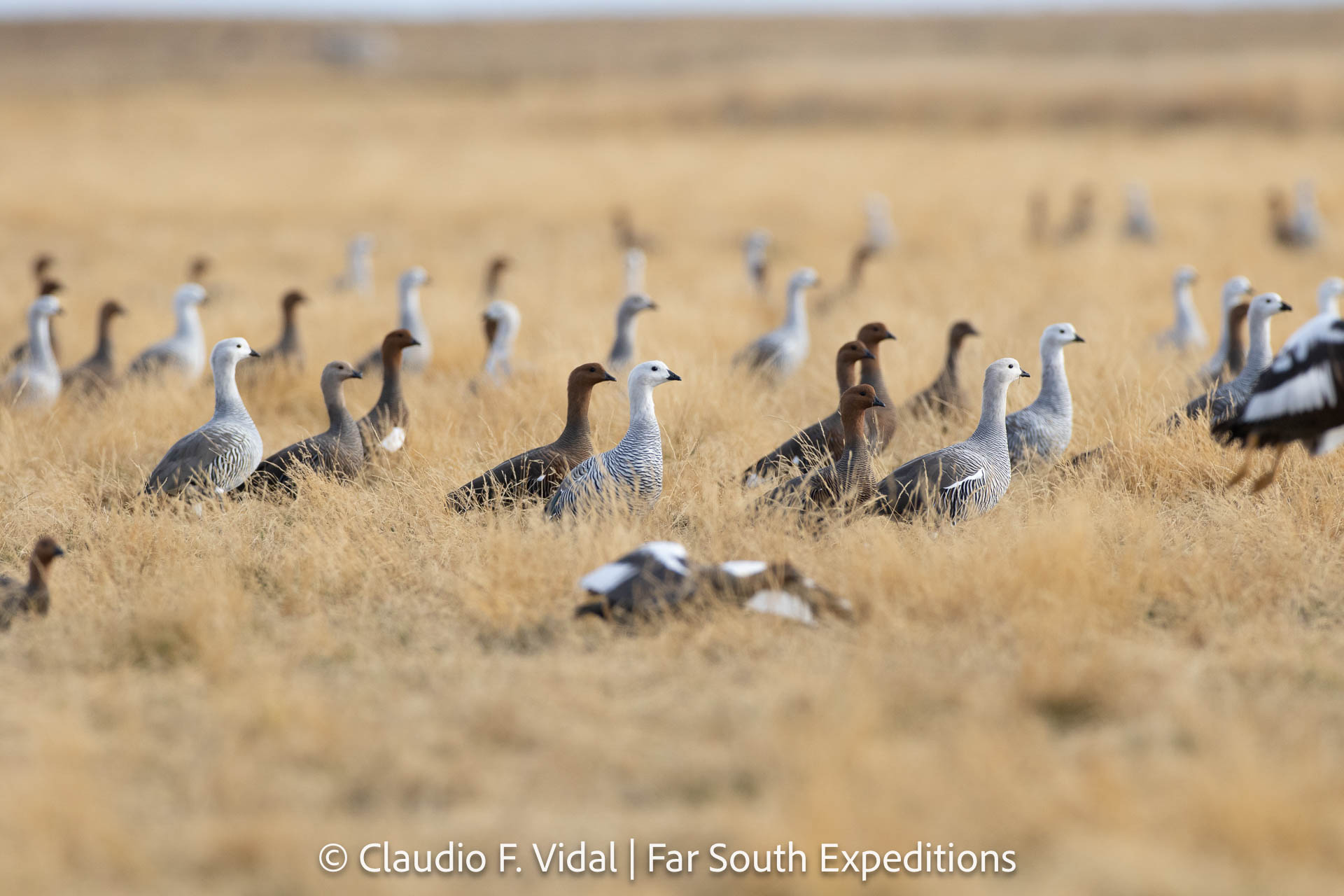
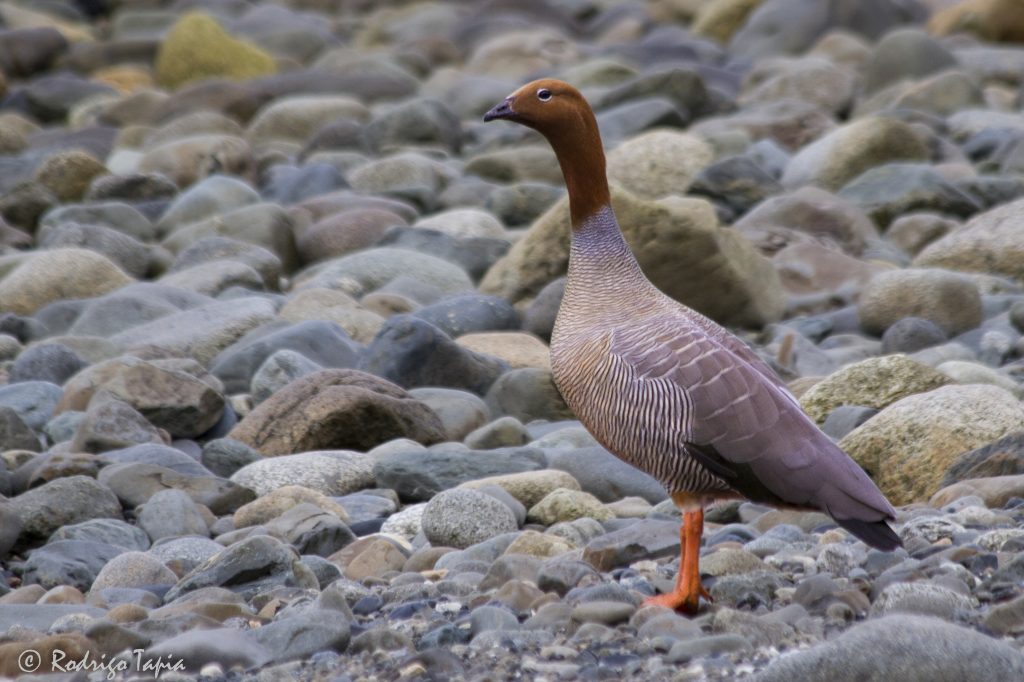
Among the open landscapes of the Patagonian steppe and southern wetlands lives one of the least known and most threatened birds of South America: the Ruddy-headed Goose (Chloephaga rubidiceps). Unlike other more abundant and conspicuous species of the genus Chloephaga, this bird often goes unnoticed, as it is frequently mistaken for the female Upland Goose (Chloephaga picta), even by those who regularly travel through Patagonia.
The Chloephaga Geese of Southern Patagonia
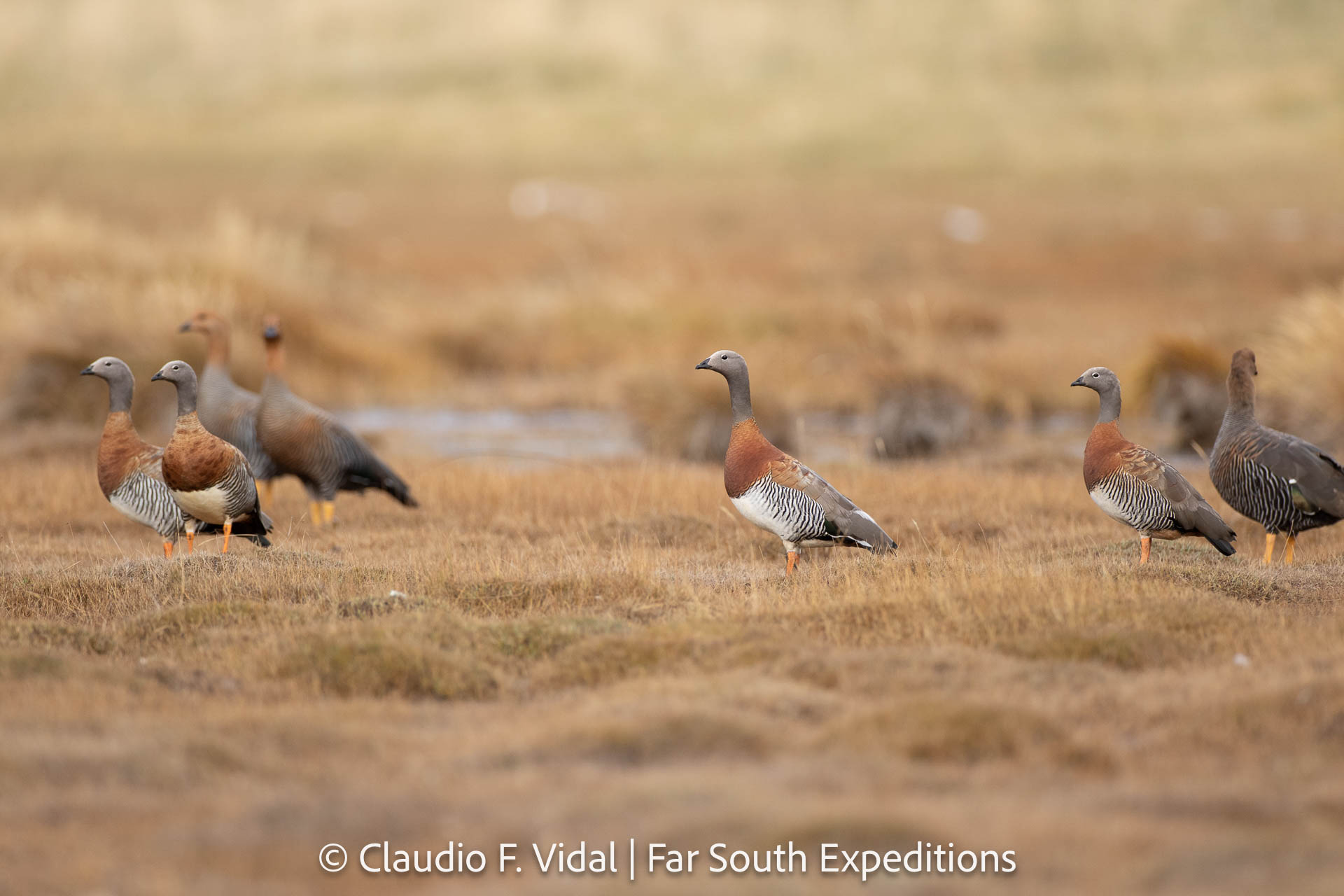
There are four species of the genus Chloephaga are found in Chile: the Upland Goose (Chloephaga picta), the Kelp Goose (Chloephaga hybrida), and the Ashy-headed Goose (Chloephaga poliocephala). However, the Magellan Region presents a unique situation: it is the only place where all these species can be observed together, including the rare Ruddy-headed Goose (Chloephaga rubidiceps).
The latter is found in northern Tierra del Fuego (in both Chile and Argentina) as well as in continental areas of the Magallanes Region in Chile.

A History Marked by Population Decline
The recent history of the Ruddy-headed Goose is, unfortunately, deeply concerning. Historically, the species had a wide distribution across Chilean and Argentine Patagonia, including the island of Tierra del Fuego. Today, its presence is far more fragmented and restricted to a few specific sites, with increasingly rare records across its continental range.
This severe population decline led the Chilean Ministry of the Environment to classify the Ruddy-headed Goose as “Endangered.” In response, recovery, conservation, and management plans have been developed, recognizing the species ecological importance and its value as part of the natural heritage of the Magallanes Region. It is currently a legally protected species in Chile.
Two Populations, Two Evolutionary Histories
In contrast to the situation in mainland Patagonia, the population of Ruddy-headed Geese in the Falkland Islands (Islas Malvinas) is considerably more abundant. However, genetic studies have shown that the island and continental populations have followed independent evolutionary trajectories for thousands of years.
A study published in the Journal of Biogeography revealed that the Falkland Islands Ruddy-headed Geese have been isolated from their continental relatives for approximately 200,000 years. This prolonged isolation has resulted in genetic differences so pronounced that the two populations are as distinct from each other as two separate species.
What Has Pushed the Ruddy-headed Goose to the Brink of Extinction?
Several factors have contributed to the critical conservation status of this species. One of the most significant was the active persecution promoted by the Argentine government during the 1930s, when the Ruddy-headed Goose was declared an “agricultural pest” along with other Chloephaga species. During winter, these birds migrated to agricultural fields in Buenos Aires Province, leading to large-scale population control campaigns.
Additional ongoing threats include illegal hunting, egg collection, wetland drainage, and predation by introduced species. Notable among the latter are the South American Gray Fox (Lycalopex griseus), introduced to Tierra del Fuego in the 1950s, and the American Mink (Neogale vison), introduced to the south of the island between 1940 and 1950, whose range continues to expand northward.
Over 1,800 km of Migration Between Chile and Argentina
South America hosts two distinct populations of the Ruddy-headed Goose: one resident in the Falkland Islands and another migratory population inhabiting mainland Patagonia. The latter undertakes seasonal migrations of approximately 1,800 km. During the austral winter, it moves north to Buenos Aires Province in Argentina, while in spring and summer, it migrates to its nesting grounds in the provinces of Santa Cruz and Tierra del Fuego (Argentina), as well as the Magallanes Region in Chile.
Did You Know?
The Ruddy-headed Goose belongs to the order Anseriformes, which includes swans, geese, and ducks. Despite their appearance, South American geese of the genus Chloephaga are not closely related to the “true geese” of the Northern Hemisphere, instead, they are more closely related to certain groups of ducks.
Field Identification
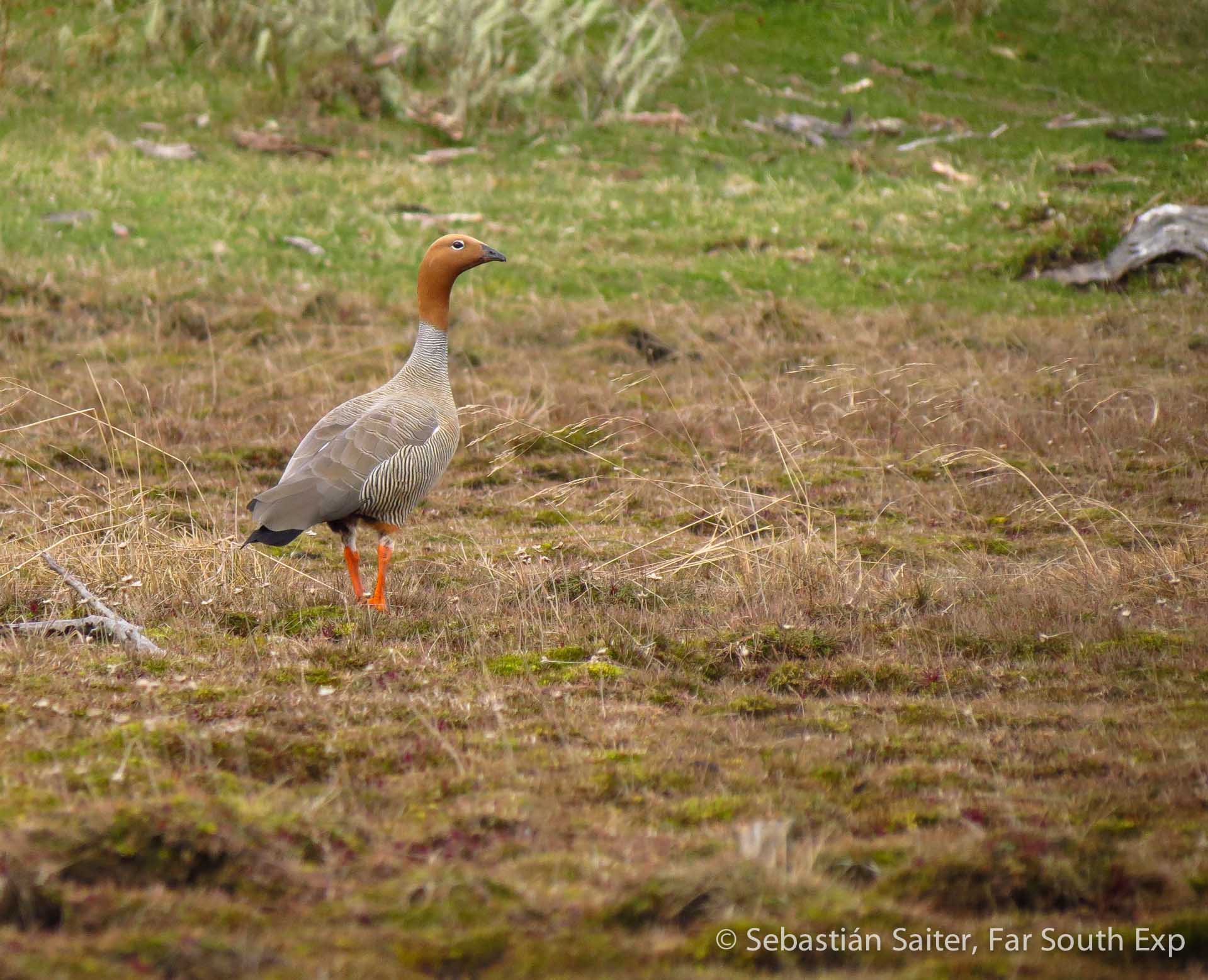
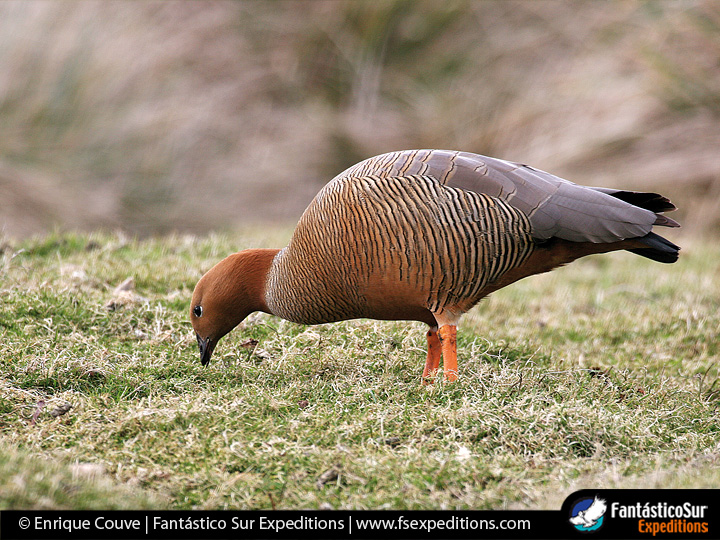
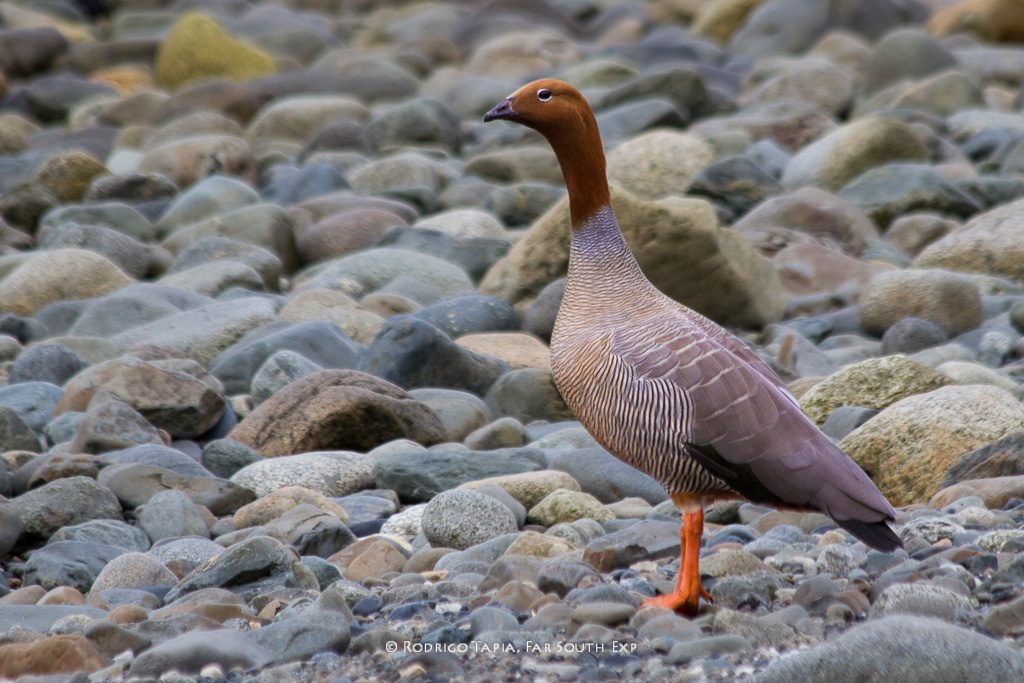
The Ruddy-headed Goose is the smallest goose species found in Chile and is characterized by its compact body. It is often confused with the female Upland Goose, but several key features allow for reliable identification in the field.
Its plumage features warm tones, with a reddish-brown head and upper neck. The lower neck, mantle, back, and underparts are whitish, finely and densely barred with dark brown and cinnamon. The bill is black. Unlike the Upland Goose, the Ruddy-headed Goose has a distinct white eye-ring , bright orange legs, and a flatter forehead. Males and females are similar in appearance, although males are usually slightly larger.
Feeding and Breeding
The Ruddy-headed Goose is a strict herbivore, feeding on roots, leaves, stems, and seeds of both aquatic and terrestrial plants, particularly those growing in Patagonian wetlands and vegas (wet meadows).
In Chile, only a few pairs successfully breed each year. Key nesting areas include the San Juan River estuary and the meadow systems of the San Gregorio commune in the Magellan Region. These areas are of critical importance for the species’ conservation and are legally protected, with hunting strictly prohibited.


Leave a Reply
Your email is safe with us.