

Amid floating icebergs and frigid waters lives one of the most remarkable predators of the Southern Hemisphere: the leopard seal (Hydrurga leptonyx). This marine mammal moves with impressive agility both in the water and on ice. Unlike other seals that live in colonies, the leopard seal is a solitary hunter and a swift swimmer.
Agile Ocean Hunter
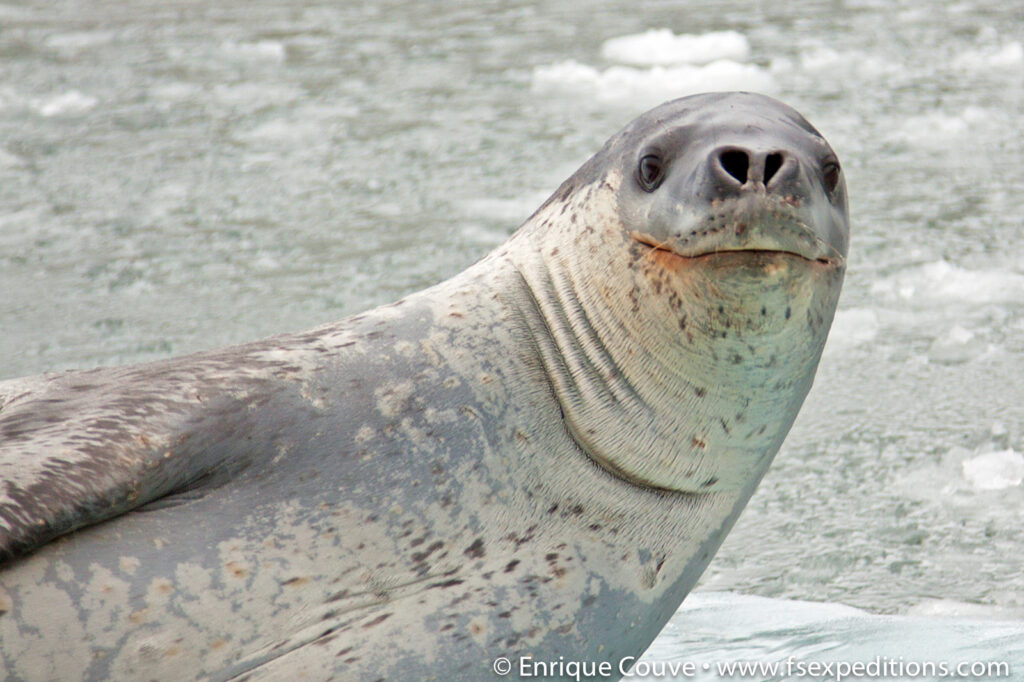
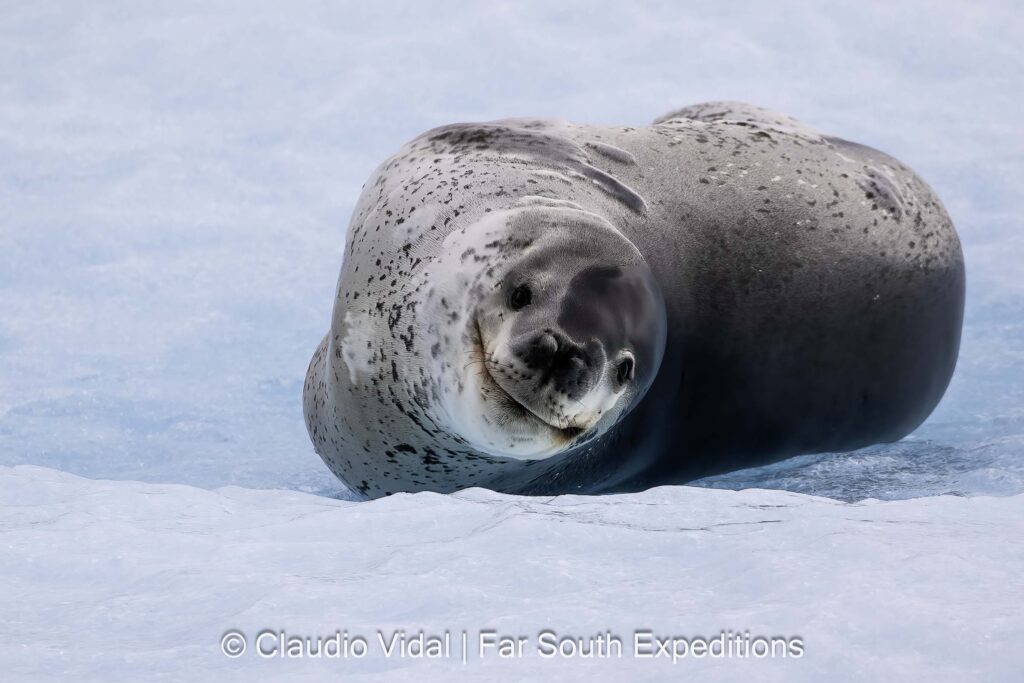
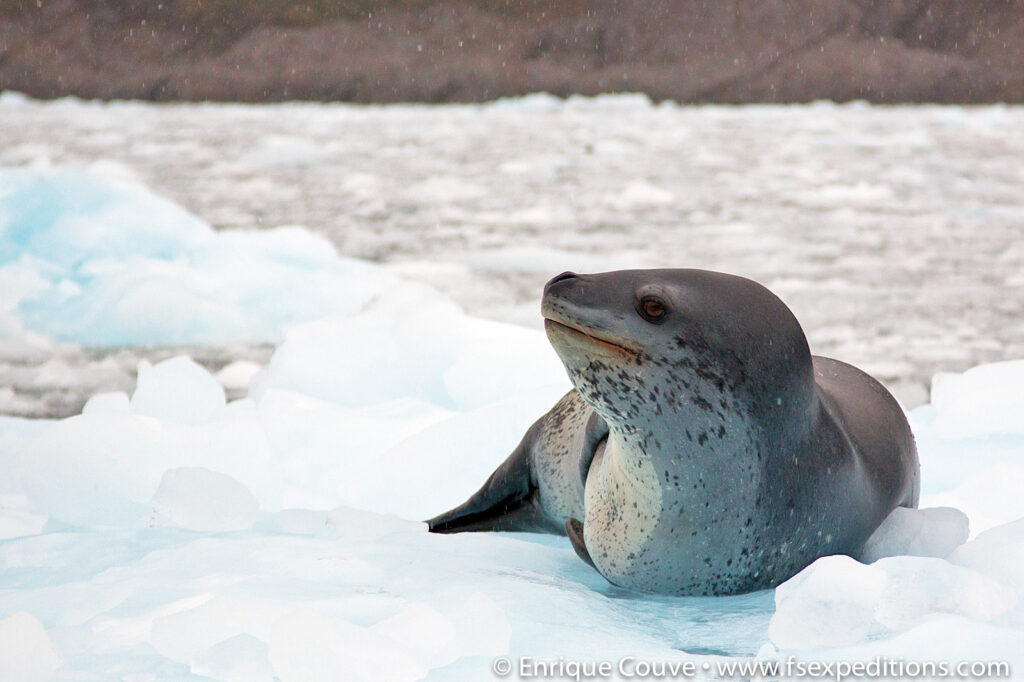
The leopard seal is not only one of the largest pinnipeds but also one of the best adapted for hunting. Its long, streamlined body and powerful foreflippers allow it to reach high speeds and maneuver gracefully beneath the ice. Adults measure between 3 and 4 meters (10–13 ft) and weigh between 320–500 kg (700–1,100 lbs), with females being larger than males.
Its dark gray coat, speckled with spots, provides excellent camouflage in turbid waters and among drifting ice blocks, ideal for ambushing prey.
Versatile Diet: Hunter and Filter Feeder
The leopard seal sits at the top of the food chain, making it an apex predator with virtually no natural enemies—except for the occasional attack by killer whales (Orcinus orca).
And its diet? Extremely varied! This solitary hunter has teeth adapted both for tearing flesh and filtering krill. It is the only pinniped that regularly preys on warm-blooded animals, such as sea lion pups and other seals. While a significant portion of its diet consists of krill — captured through filter feeding — it also preys on seabirds and scavenges carrion. Its great agility even allows it to leap out of the water to snatch penguins from their colonies, dragging them back to the ocean to devour them.
It is one of the few marine mammals capable of switching between hunting vertebrates and filtering tiny organisms, making the leopard seal a true opportunist in its ecosystem.
The Mystery of Mating
Despite being solitary animals, mating is an essential part of their life cycle. However, their mating behavior remains largely a mystery. It has never been directly observed, though it is believed to take place in the water between November and February.
Life Between Ice and Ocean
This species has a circumpolar distribution, inhabiting the icy waters surrounding Antarctica, resting on ice floes, and migrating to sub-Antarctic islands during winter in search of milder waters. In Chile, resident individuals can be found in Laguna San Rafael (Aysén Region) and Seno Almirantazgo (Magallanes Region).

Facts About the Leopard Seal
– They can live up to 26 years.
– The species was described in 1820 by naturalist De Blainville near the Falkland Islands.
– Typical dives range from 10–50 meters (30–165 ft), but dives as deep as 304 meters (1,000 ft) have been recorded.
Want to Experience Observing and Photographing Leopard Seals?
At Far South Expeditions, we offer unique experiences designed for those looking to capture unforgettable moments of this marine predator and other iconic species of the region.
Click on the different options to go in search of the leopard seal:


Leave a Reply
Your email is safe with us.